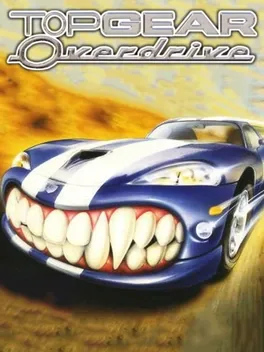
Top Gear Overdrive
Introduction
Top Gear Overdrive, released in 1998 for the Nintendo 64, represents a high-octane departure for the long-running racing franchise. Developed by Snowblind Studios, the game traded the more clinical, simulation-lite approach of its predecessors for a gritty, fast-paced arcade experience. It arrived during a golden era of 3D racers on the console, competing with the likes of San Francisco Rush and Beetle Adventure Racing. With its aggressive AI, crunchy heavy metal soundtrack, and focus on pure speed, Overdrive carved out a unique niche that remains a point of nostalgia for many retro gaming enthusiasts today. The title remained consistent across all regions, known purely as Top Gear Overdrive, which helped solidify its brand identity as a rebellious alternative to more traditional racers of the period.
Story & Setting
Unlike narrative-driven racers that feature complex characters or cinematic plots, Top Gear Overdrive focuses entirely on the journey of an aspiring professional racer climbing the ranks of an international racing circuit. The setting is diverse and stylized, taking players across a variety of environments that challenge both their reflexes and car control. From the scorching heat of volcanic regions and dusty desert canyons to the treacherous ice of snowy mountain passes and industrial zones, the world of Overdrive feels expansive and hazardous. Each track is designed with a "rough around the edges" aesthetic, featuring interactive elements and environmental hazards that reinforce the game's aggressive, high-stakes tone. The lack of a formal plot is compensated for by the atmospheric level design that makes every season feel like a global tour.
Gameplay
The core of the experience lies in the Season Mode, which is structured into six increasingly difficult seasons. As players progress, the number of races per season increases, the tracks become more complex, and the computer-controlled opponents become significantly faster and more tactical. One of the most distinct—and often challenging—features of the game is the grid start. Players begin every race at the very back of the pack at the start line. To make matters more difficult, the computer players at the front of the grid would often start a third of the way around the first lap. This creates a gameplay loop centered on a frantic chase, requiring players to weave through traffic with precision to secure a victory.
To combat the AI's significant advantage, players start with three charges of nitrous oxide, which provide a temporary but powerful speed boost. Knowing exactly when to deploy these charges is often the difference between a podium finish and a loss. Furthermore, the tracks are filled with shortcuts. Mastering these hidden paths is not just a bonus; in later seasons, using shortcuts becomes a mandatory strategy to catch the leading cars. At the end of each race, players are presented with a screen to spend earned credits on various upgrades for their car, specifically focusing on improving acceleration and handling. Players also have the flexibility to change their car for a better (or even worse) vehicle depending on their budget, and they can purchase extra nitrous oxide to ensure they have an edge in the next heat.
Top Gear Overdrive was a dedicated console experience, optimized specifically to take advantage of the hardware capabilities of the Nintendo 64 across various global regions.
Legacy
The legacy of Top Gear Overdrive is tied to its status as one of the most technically impressive racers of the late 90s. While it didn't reinvent the racing genre, its technical prowess was notable for the time. It was one of the early titles to support the Nintendo 64 Expansion Pak, allowing for a high-resolution mode that made the visuals much sharper, providing a glimpse into the future of console graphics. It also marked a significant milestone for Snowblind Studios before they moved on to achieve mainstream success with major action-RPG titles. The game is remembered fondly today for its unapologetic difficulty, its distinct weather effects like rain and snow, and its unique soundtrack that departed from the melodic tunes of the SNES era in favor of a heavier sound.
Fun Facts
One of the most interesting aspects of Top Gear Overdrive is its soundtrack, which was composed by the band Grindstone, giving the game a distinct underground rock and metal vibe that was rare for Nintendo-published titles. Additionally, the game featured a robust car painting system that allowed players to apply strange textures to their vehicles, including animal skins and metallic flecks. Another fun fact is the game's inclusion of destructible objects like traffic cones and signs, which added a level of environmental interactivity that made the high-speed collisions feel much more impactful. Furthermore, the game was praised for its consistent frame rate, which was a significant achievement given the complexity of its environments and the speed of the gameplay.