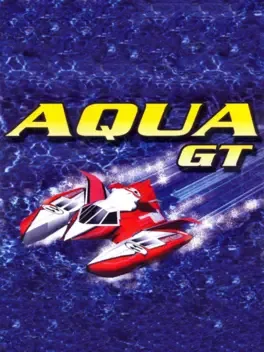
Aqua GT
Introduction
In the late 1990s and early 2000s, the racing genre was expanding beyond the asphalt, looking toward the waves for new thrills. Aqua GT emerged during this era as a high-octane powerboat racing simulator that aimed to blend realistic water physics with accessible arcade action. Developed with a focus on speed and environmental interaction, it offered players a unique alternative to the standard car-based racers that dominated the market. Whether you were navigating the tight turns of a European canal or pushing a high-speed craft to its limits on the open water, Aqua GT provided a refreshing splash of variety for console owners. Its commitment to tiered progression and varied racing conditions ensured that players had plenty of reasons to return to the cockpit.
Story & Setting
Aqua GT takes players on a world tour, but rather than visiting generic racetracks, it focuses on the intricate canal systems of some of the world's most famous cities. The game features meticulously designed tracks set in the historic waterways of London, the iconic winding canals of Amsterdam, and the bustling maritime corridors of New York. This urban focus gives the game a distinct aesthetic, trading natural landscapes for the architectural beauty of metropolitan hubs. To keep the experience dynamic, each track features environmental variations. Players can choose to race during the day, where visibility is high and the cityscapes are vibrant, or at night, where neon lights reflect off the water's surface. Adding a layer of technical challenge is the dynamic tide system. Every track can be experienced at high or low tide, which fundamentally changes the racing line and can reveal or hide obstacles and shortcuts, making the mastery of each city a rewarding endeavor.
Gameplay
The core of Aqua GT is built around three primary gameplay modes: Championship, Arcade, and Two-player. The Championship mode is the centerpiece of the single-player experience, structured as a tiered journey through the Bronze, Silver, and Gold Championships. As players climb these ranks, the competition becomes more fierce, requiring better boat control and strategic use of the environment. Success in the championship is also the key to expanding your garage. While you start with a selection of five basic boats, there are an additional 15 vessels to unlock, bringing the total roster to 20 unique powerboats. Each boat is defined by its specific statistics in speed, acceleration, and handling, allowing players to find a craft that suits their specific racing style. For those seeking immediate action, the Arcade mode challenges players to beat the clock in a time-trial format, emphasizing pure speed and efficiency. Finally, the Two-player split-screen mode brings the competition home, allowing friends to go head-to-head in a test of aquatic supremacy.
This game was released on several platforms, including the PlayStation and the Sega Dreamcast, primarily targeting the European market during its initial launch period.
- DREAMCAST: PAL
- PLAYSTATION: PAL
Legacy
While Aqua GT may not have reached the same level of mainstream fame as some of its contemporaries, it holds a special place in the hearts of powerboat racing enthusiasts. It is often remembered for its atmospheric urban tracks and the way it utilized the hardware of the time to render convincing water effects. In the PAL region specifically, it remains a notable title for collectors of the Dreamcast and original PlayStation, representing a period when developers were willing to experiment with niche racing sub-genres. Its inclusion of real-world cities and the tide mechanic gave it a level of depth that many other budget-friendly racers of the era lacked.
Fun Facts
One of the most impressive aspects of Aqua GT is the boat roster; by the time you finish the Gold Championship, you will have quadrupled your starting boat count from five to twenty. Interestingly, the game does not utilize any alternative names, maintaining the singular title of Aqua GT across all its released versions. The tide system was one of the game's most praised technical features, as it effectively doubled the number of layouts available for each city track by altering the navigable area based on water levels.