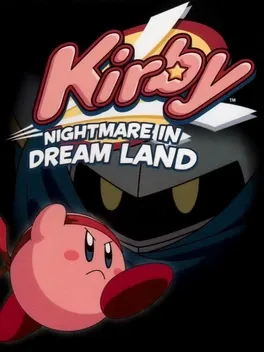
Kirby: Nightmare in Dream Land
Introduction
Kirby: Nightmare in Dream Land is a vibrant and meticulously crafted remake of the 1993 NES classic, Kirby's Adventure. Released in 2002 for the Game Boy Advance, this title brought the pink puffball's most significant adventure into the 32-bit era with overhauled graphics, enhanced audio, and new gameplay modes. Known in Japan as Hoshi no Kirby: Yume no Izumi no Monogatari, the game was designed to introduce the foundational mechanics of the Kirby series to a portable audience. It stands as a pivotal moment in the franchise, transitioning the series from its 8-bit origins into the colorful, fluid aesthetic that would define Kirby games for the next decade. Whether you are a long-time fan or a newcomer, this remake offers a polished experience that highlights why Kirby remains a staple of the platforming genre.
Story & Setting
The narrative takes place in the peaceful land of Dream Land, where the inhabitants have suddenly lost the ability to dream. Kirby soon discovers that the Fountain of Dreams, which provides restful sleep to the kingdom, has been tampered with. King Dedede has stolen the legendary Star Rod and broken it into seven pieces, giving the fragments to his allies. Without the Star Rod, the fountain is powerless, and a dark entity begins to loom over the horizon. Often referred to by its descriptive Japanese title, Kirby of the Stars: The Story of the Fountain of Dreams, the game follows Kirby as he traverses diverse landscapes to recover the shards. From the sunny fields of Vegetable Valley to the crystalline depths of Rainbow Resort, Kirby must confront his rival and uncover a deeper threat hidden within the shadows of the dream world.
Gameplay
At its core, Kirby: Nightmare in Dream Land is a side-scrolling platformer that emphasizes Kirby’s unique ability to inhale enemies and copy their powers. While the original Game Boy title introduced Kirby, it was this specific adventure that popularized copy abilities like Fire, Ice, Spark, and the iconic Sword. In the Chinese-speaking regions, the game is recognized as 易之卡比:梦之泉, and it retains the fluid, accessible controls that fans expect. Players must navigate through eight distinct worlds, each culminating in a boss battle. The remake introduces mini-games like Bomb Rally and Kirby's Air Grind, which provide a break from the main quest. Additionally, the level design encourages exploration, with hidden switches that unlock secret areas and bonus rooms, rewarding players who look beyond the critical path. The transition to the Game Boy Advance hardware allowed for much larger sprites and a multi-layered background system that makes every level feel alive.
This title has been made available on various Nintendo systems, ensuring its accessibility across different generations of hardware.
Legacy
The legacy of Kirby: Nightmare in Dream Land is defined by its role as the definitive version of a classic. By modernizing the NES original, HAL Laboratory set a high standard for how remakes should be handled—preserving the spirit of the original while adding enough new content to justify a return. It was a commercial success, praised for its beautiful art style and for being one of the most visually impressive games on the Game Boy Advance at the time. It also solidified the design of Meta Knight, who would go on to become one of the most popular characters in the Nintendo pantheon. The game's influence can still be felt in modern Kirby titles, which continue to use many of the copy ability concepts and environmental tropes established or refined in this particular entry.
Fun Facts
One of the most exciting additions to this remake is the "Meta Knightmare" mode, which is unlocked after completing the game with a 100% rating. In this mode, players control Meta Knight, who moves faster and uses his sword instead of copy abilities, providing a challenging time-attack experience. Another interesting fact is that the game supported four-player cooperative play via the GBA Link Cable, a feature that was quite ambitious for its time. Additionally, many of the sound effects and musical arrangements from this game were later reused in the Super Smash Bros. series, further cementing its place in Nintendo's cultural history. Despite being a remake, it contains several brand-new secret areas that were not present in the 1993 original, giving veterans a reason to explore every nook and cranny once again.