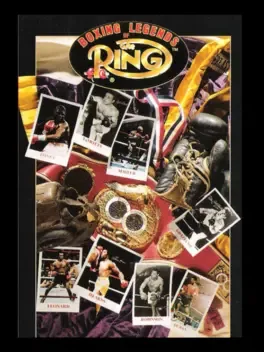
Boxing Legends of the Ring
Introduction
The 16-bit era of gaming was a transformative time for sports simulations, and Boxing Legends of the Ring stands as a hallmark of that evolution. Developed by Sculptured Software and published by Electro Brain, this title aimed to move beyond the arcade-style simplicity of its predecessors and provide a more technical, strategic boxing experience. Whether players recognize it by its Western title or through its regional variants like Final Knockout or Chavez II, the game remains a beloved fixture in the library of retro sports enthusiasts.
Story & Setting
While Boxing Legends of the Ring is a sports title, its narrative heart lies in its robust Career Mode. Players are tasked with taking a fledgling boxer from the bottom of the rankings all the way to the world championship. The "setting" is the high-stakes world of professional boxing, featuring a roster of real-life icons from the sport's history. Throughout the journey, players must navigate a gauntlet of legendary opponents, including greats like Julio César Chávez, Thomas Hearns, and Jake LaMotta. The game effectively captures the grit of the ring, where every fight feels like a grueling step toward immortality in the boxing pantheon.
Gameplay
The gameplay of Boxing Legends of the Ring is defined by its tactical depth and unique visual feedback systems. Unlike many boxing games that allow free movement, movement here is restricted to side-stepping left or right. This creates a focused, head-to-head confrontation where timing and positioning are paramount. Players can execute a variety of punches, including left jabs, crosses to the head, hooks to the body, and devastating uppercuts. Most punches can be thrown with either hand, allowing for complex combinations.
A standout feature is the visual damage system. Small portraits of the boxers' faces at the top of the screen dynamically reflect the physical toll of the match. As fighters receive punishment, their portraits show cuts and bruises that indicate their current health status. Additionally, a boxing glove-shaped meter tracks a fighter's remaining power. As in a real bout, throwing too many punches leads to fatigue, causing the meter to drop and resulting in weaker strikes.
Strategy is further enhanced by three core attributes: 'power', 'stamina', and 'chin'. Defensive techniques like blocking, dodging, and clinching are essential for survival. For those looking for a knockout blow, the game features 'super punches'—high-power right crosses or uppercuts. While boxers start with one super punch per round, they can earn more by successfully knocking down their opponent, turning the tide of the match in an instant.
This game was released on several platforms, including the Super Nintendo Entertainment System and the Sega Mega Drive/Genesis.
- SEGA MEGA DRIVE/GENESIS: NTSC-U
- SUPER NINTENDO ENTERTAINMENT SYSTEM: PAL, NTSC-U
Legacy
Boxing Legends of the Ring is remembered for introducing a level of realism that was ahead of its time. By focusing on stamina management and visual injuries, it paved the way for later simulations like the Fight Night series. Its regional identity is also a significant part of its legacy; in Mexico, it was rebranded as Chavez II to capitalize on the fame of Julio César Chávez, while Japanese audiences knew it as Final Knockout. It remains a highly-regarded title for its challenging AI and the authentic feel of its 16-bit pugilism.
Fun Facts
- The game features a roster of legendary middleweights, many of whom were still active or freshly retired at the time of release.
- The developer, Sculptured Software, was famous for their high-quality console ports of arcade hits like Mortal Kombat.
- The visual damage system was revolutionary for the early 90s, as most games only used simple health bars without aesthetic changes to the character models.
- In the Chavez II version, the game was fully localized for the Latin American market, featuring Spanish menus and branding.