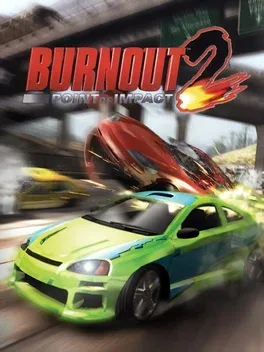
Burnout 2: Point of Impact
Introduction
Burnout 2: Point of Impact is the high-octane sequel that refined and defined the arcade racing genre for a generation. Developed by Criterion Games, this title took the frantic energy of its predecessor and polished it into a sleek, aggressive experience that rewarded risk-taking above all else. While many racing games of its era were moving toward simulation and professional track driving, this game—often referred to by fans as B2—doubled down on the chaos of urban environments and the visceral thrill of high-speed collisions. It is a game where the roar of the engine is matched only by the sound of twisting metal, creating a rhythmic loop of speed and destruction that remains addictive to this day.
Story & Setting
Rather than following a traditional narrative, Burnout 2: Point of Impact focuses on the world as its primary character. The designers meticulously crafted an entire fictional city and its surrounding regions, treating the geography as a cohesive landscape rather than a series of disconnected tracks. This design philosophy means that race courses are woven directly into the county's infrastructure. As you progress through various championships, you will notice that certain race paths interlace with sections of previous tracks, giving the world a sense of scale and realism. From sun-drenched coastal highways to densely packed urban centers filled with realistic traffic, the setting provides a playground for high-speed mayhem. The presence of everyday city infrastructure, such as buses, trucks, and intersections, transforms the environment into an obstacle course where every street corner presents a potential disaster.
Gameplay
At its core, Burnout 2: Point of Impact is built on the philosophy of "offensive driving." Strategic braking and safe maneuvers are discarded in favor of sheer aggression. Players are encouraged to drive on the wrong side of the road, weave through oncoming traffic, and perform massive jumps. These dangerous actions fill the "Burnout" meter. Once the meter is full, players can trigger a speed boost that sends their vehicle into a frenzied state of acceleration. If you manage to deplete the entire boost bar while continuing to drive dangerously, you can chain multiple "Burnouts" together, maintaining incredible speeds for extended periods.
One of the most significant additions to this entry is the formalization of the Crash Mode. While the main races are about avoiding wrecks to stay ahead, Crash Mode tasks players with doing the exact opposite. You are intentionally launched into busy intersections with the goal of causing the most expensive and spectacular multi-car pile-up possible. This mode turned the game’s physics engine into a puzzle-like spectacle, making destruction just as rewarding as crossing the finish line first.
This title saw a wide release across the major consoles of its generation, ensuring that fans of different hardware could experience the carnage. It was originally launched on the PlayStation 2 before being ported with enhanced features to other systems.
Legacy
Burnout 2: Point of Impact is often cited as the bridge between the franchise's experimental beginnings and its peak popularity in the mid-2000s. It proved that there was a massive market for arcade racers that prioritized fun and visual spectacle over realistic handling. The success of B2 allowed Criterion Games to further iterate on the formula, eventually leading to the "Takedown" mechanic in the third game, which would become a staple of the series. Even decades later, the game is remembered for its incredible sense of speed and its technical prowess, as it maintained a smooth frame rate even during its most chaotic moments.
Fun Facts
- The game is frequently called "B2" in developer notes and within the speedrunning community.
- Unlike the first game, which was somewhat punishing, B2 introduced a more forgiving "Impact Time" mechanic that allowed players to see their crashes in slow motion.
- The GameCube and Xbox versions, released later, featured improved textures and additional car skins compared to the original PS2 release.
- The soundtrack features a dynamic music system where the intensity of the audio shifts based on how fast the player is driving and how full their boost meter is.