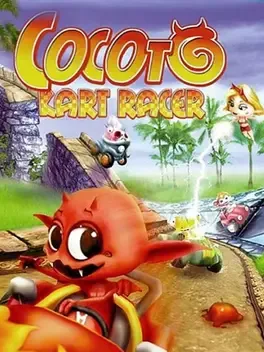
Cocoto Kart Racer
Introduction
Story & Setting
Gameplay
Platforms
Legacy
Fun Facts
Introduction
In the mid-2000s, the kart racing genre was booming, led by giants like Mario Kart. Amidst this competitive landscape, Neko Entertainment and Bigben Interactive introduced a quirky, hell-themed alternative: Cocoto Kart Racer. Featuring the titular little imp who had already appeared in platforming and shooting titles, this game aimed to bring a more sinister yet accessible twist to the family-friendly racing formula. While many kart racers of the era were quickly forgotten, Cocoto's charm and the sheer variety of platforms it touched helped it carve out a niche for gamers looking for something slightly different from the Mushroom Kingdom’s offerings. It successfully combined the chaotic nature of racing with a unique aesthetic that set it apart from its peers.
Story & Setting
Cocoto Kart Racer takes place in a vibrant, cartoonish version of the underworld. The protagonist, Cocoto, is a small, red imp who finds himself embroiled in a series of high-stakes races across devilish environments. Unlike many racing games that lack a narrative hook, this title leans into its established universe of characters. Cocoto is joined by a cast of 12 distinct characters, each with their own crazy karts and unique personalities. The settings range from fiery volcanic tracks to eerie, shadowy landscapes, all designed to reinforce the devilish theme of the series. Interestingly, the game is also known in some circles and mobile ports as Cocoto Kart Online, reflecting its attempts to modernize the imp's racing adventures for a connected audience as technology evolved. This world-building helps players feel invested in the races beyond just reaching the finish line.
Gameplay
The core of Cocoto Kart Racer is built on the classic karting foundation: speed, drifting, and chaos. Players can choose from a roster of 12 characters, ensuring a variety of playstyles and visual flair. The game offers three primary modes: Championship, Simple Race, and Battle. Championship mode serves as the main progression path, where players must master various tracks to unlock new content and prove their dominance. Simple Race allows for quick sessions, perfect for solo practice or jumping straight into the action. The Battle mode is where the devastating attacks truly shine, allowing up to four players to engage in frenetic combat within arena-style maps.
The mechanics focus heavily on using power-ups to gain an advantage. These offensive and defensive items allow players to beat their opponents with tactical strikes, much like the shells and bananas found in its contemporaries. The physics are tuned for accessibility, making it easy for younger players to pick up, yet the later Championship levels provide a decent challenge for veteran racers. Whether you are navigating tight corners or launching a surprise assault with numerous powers at your disposal, the gameplay remains consistently energetic and fun for group play.
This game was released on several platforms, including the PlayStation 2, Nintendo GameCube, and eventually the Wii to reach a wider audience of casual gamers.
Legacy
The legacy of Cocoto Kart Racer is tied closely to the budget gaming era of the early 2000s. While it never reached the critical acclaim of AAA racing titles, it became a staple of the Bigben Interactive catalog. For many players, it was an affordable alternative that provided solid multiplayer fun. It also helped solidify Cocoto as a recognizable mascot for Neko Entertainment, leading to several spin-offs in other genres such as fishing and platforming. Its presence on the Wii, in particular, introduced the character to a new generation of motion-control enthusiasts, ensuring the imp's place in gaming history.
Fun Facts
- Despite being a hell-themed game, the art style is purposefully cute and exaggerated to maintain a kid-friendly rating.
- The game was one of the few kart racers on the PlayStation 2 to maintain a consistent frame rate even during intense four-player split-screen sessions.
- The alternative title Cocoto Kart Online was primarily used for digital and mobile iterations, highlighting the franchise's longevity.
- The character designs were inspired by classic European animation styles, giving the game a distinct look compared to Japanese or American racers.