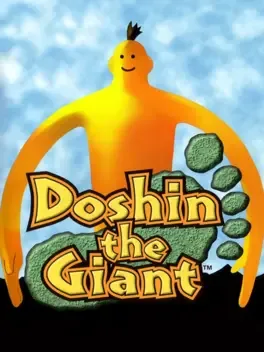
Doshin the Giant
Introduction
Doshin the Giant is one of the most eccentric and captivating titles in Nintendo’s storied history. Originally conceived for the ill-fated Nintendo 64DD, this god simulation game eventually found a broader audience as an enhanced port on the Nintendo GameCube. Developed by Param and Marigul Management, the game places players in the massive footsteps of a benevolent—or malevolent—yellow giant. It stands as a spiritual successor to earlier god games like Populous but is infused with a distinctly Japanese charm and a relaxing, rhythmic pace that sets it apart from its contemporaries. Whether you are terraforming the landscape or watching the sunset over a tropical island, the experience of being a literal titan is handled with both whimsy and philosophical depth. It remains a standout example of Nintendo’s willingness to experiment with genre-bending concepts during the late 90s and early 2000s.
Story & Setting
The game takes place on the lush, tropical island of Barudandia. According to the island's mythology, the giant Doshin rises from the sea as the sun comes up, tasked with aiding the inhabitants of the land. Known in its original Japanese release as Kyojin no Doshin, the narrative is driven by the interactions between the giant and the four distinct tribes that inhabit the island. These tribes—distinguished by the colors of their clothing—have their own cultures, architectures, and needs. As the giant, your role is to foster their growth, leading them to build impressive monuments and expand their villages. Alternatively, the player can take on the mantle of Jashin, the giant of hate, whose destructive power reshapes the world through chaos and fear. The translation Doshin of the Giants often reflects the creature's status as a legendary figure within this self-contained ecosystem.
Gameplay
At its core, Doshin the Giant is about managing the island's geography and the emotions of its people. Doshin can raise or lower the terrain with his hands, creating mountains to block the wind or valleys to provide flat land for farming. Interaction with the villagers is the primary mechanic; by helping them—such as moving trees to their village or leveling land—you earn "Love" (represented by hearts), which causes Doshin to grow in size. Conversely, destroying property or stepping on villagers earns "Hate" (skulls), which also contributes to his growth but transforms him into the winged, fire-throwing Jashin. The ultimate goal is to help the four tribes build all 15 unique monuments. To achieve this, players must carefully manage the tribes' needs, which often conflict with one another. The game operates on a daily cycle; at the end of each day, Doshin returns to the sea as the sun sets, and his progress is recorded. The physics-based terraforming was remarkably advanced for its time.
This game was released on several platforms, including the Nintendo 64DD and the Nintendo GameCube.
Legacy
The legacy of Doshin the Giant is deeply tied to the history of Nintendo’s experimental hardware. As a launch title for the Nintendo 64DD, it was meant to showcase the writable nature of the magnetic disks, which allowed the world to remember every single change the player made. When the GameCube port arrived, it brought the game to Europe and Japan, though it notoriously never saw an official release in North America. This exclusivity has turned it into a sought-after cult classic for Western collectors. The game’s creator, Kazutoshi Iida, is celebrated for his avant-garde approach to game design, and Doshin’s influence can be seen in later life-sim and eco-sim elements of various indie titles. Doshin himself has made cameo appearances in the Super Smash Bros. series as a trophy, ensuring that even players who never touched the original game recognize his smiling, yellow face.
Fun Facts
- In the original N64DD version, players could use a second disk called Tink’s Adventure which allowed them to play from the perspective of a small child interacting with the giant.
- Doshin’s name is a play on the Japanese onomatopoeia "doshin," which represents the sound of a heavy, thumping footstep.
- The game features a dynamic music system that changes based on the giant's current alignment, shifting between peaceful melodies and more intense tones for Jashin.
- Interestingly, the GameCube version significantly improved the draw distance and textures compared to the N64DD original.
- There are also hidden Islands of the Past that players can discover if they manage the tribes' evolution and monument building with extreme precision.