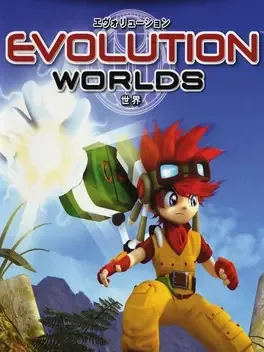
Evolution Worlds
Introduction
When the Nintendo GameCube was in its infancy, the console was hungry for role-playing games that could define its library. Enter Evolution Worlds, a vibrant JRPG developed by Sting Entertainment and published by Ubisoft. This title is unique as it serves as a comprehensive package, effectively combining the first two entries of the Evolution series—Evolution: The World of Sacred Device and Evolution 2: Far Off Promise—into a single, cohesive experience. With its charming anime-style aesthetic and addictive dungeon-crawling loops, Evolution Worlds offered a distinct flavor to fans of the genre who were looking for something different from the standard high-fantasy tropes of the era.
Story & Setting
The narrative centers on a young, spirited boy named Mag Launcher. As the scion of the world-famous Launcher family of explorers, Mag has massive shoes to fill. His father disappeared during an expedition, leaving the family in debt and Mag with a reputation to rebuild. The game is set in a world where ancient technology and ruins are the keys to fortune and prestige. Mag isn't alone on his journey; he is accompanied by Linear Cannon, a mysterious and mostly silent girl who arrived at his doorstep with a letter from his father, and Gre, the family’s incredibly loyal and multi-talented butler.
Often referred to in its thematic roots as a Quest For Glory, the story follows the trio as they navigate the bustling Society Museum and venture into dangerous ruins to uncover the mysteries of the past. The setting balances a lighthearted, comedic tone with moments of genuine wonder as Mag strives to become the world's greatest adventurer while paying off his family's lingering debts.
Gameplay
Evolution Worlds is built upon two main pillars: town management and dungeon exploration. The core combat is a traditional turn-based system but with a tactical twist involving character positioning. Players must manage their party's formation on a grid, as certain attacks have specific ranges and area-of-effect properties. The primary weapons used by the characters are known as Cyframes—ancient, customizable mechanical appendages that can be upgraded using various parts found in dungeons.
Speaking of dungeons, Evolution Worlds utilizes randomly generated floors, ensuring that every expedition feels fresh. This roguelike element requires players to carefully manage their resources, as getting too deep into a ruin without proper supplies can be disastrous. Between adventures, Mag returns to his home base to interact with the townspeople, upgrade his Cyframe, and progress the storyline through beautifully animated cutscenes and fully voiced dialogue—a notable upgrade from the original Dreamcast versions.
This game was released on the Nintendo GameCube, providing an accessible way for Nintendo fans to experience the saga that originally began on the Sega Dreamcast.
Legacy
Evolution Worlds remains a significant title for the GameCube as it was one of the first major JRPGs available for the system. While it faced stiff competition from heavyweights like Tales of Symphonia and Skies of Arcadia Legends later in the console's lifecycle, it carved out a niche for itself thanks to its colorful characters and approachable mechanics. It is often remembered fondly by fans for its "compact" RPG feel—offering a dense experience that doesn't overstay its welcome while still providing hours of dungeon-crawling depth. For many, it served as an entry point into the broader world of dungeon-crawlers and turn-based strategy.
Fun Facts
- The game actually condenses the plot of the first Evolution title into the first few hours of the game, while the majority of the runtime is dedicated to the story of Evolution 2.
- Mag Launcher’s name is a playful pun on heavy weaponry, a theme that carries over to other characters like Linear Cannon and Chain Gun.
- Despite being a game about exploring ancient ruins, the protagonist, Mag, is frequently shown to be terrified of ghosts.
- The GameCube version features significantly more voice acting than the original Dreamcast releases, helping to bring the anime-inspired cast to life.