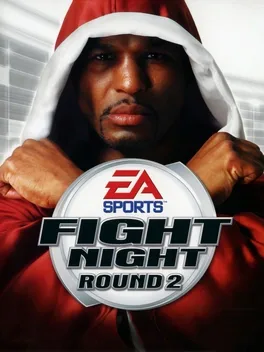
Fight Night Round 2
Introduction
In the mid-2000s, the sports gaming landscape was undergoing a significant shift toward realism and immersive control schemes. Leading the charge for combat sports was EA Sports with its definitive boxing title, Fight Night Round 2. As the second installment in the celebrated franchise, this title did not just iterate on its predecessor; it refined the sweet science into a digital art form. By blending high-fidelity visuals with a revolutionary control system, it captured the brutal beauty of the ring like never before. Whether you were a casual fan of the sport or a dedicated pugilist enthusiast, Round 2 offered a visceral experience that made every punch feel heavy and every victory hard-earned. It remains, to this day, a benchmark for how physics and player agency can merge in a sports simulation.
Story & Setting
While sports games are rarely known for a narrative in the traditional sense, Fight Night Round 2 provides a compelling "rags-to-riches" journey through its deep Career Mode. Players begin their odyssey as a raw amateur, training in a gritty, dimly lit gym tucked away in the shadows of Queens, New York. This setting serves as the perfect backdrop for the struggle of an aspiring fighter. From these humble beginnings, you must navigate the amateur circuit, honing your skills and building a reputation. As you rack up wins, the scenery shifts from the local shady gyms to the bright lights of world-class arenas. Beyond the custom career, the game allows players to step into the shoes of legendary boxers, reliving their storied careers and recreating historical matchups that defined eras of boxing history. The atmosphere is further heightened by a contemporary hip-hop soundtrack, though it is worth noting the tracks are edited versions of the originals.
Gameplay
The heartbeat of Fight Night Round 2 is the "Total Boxer Control" system. Unlike traditional fighters that rely on button mashing, this game utilizes the analog sticks to simulate the movement of a boxer's arms. Making specific gestures with the sticks allows players to throw jabs, hooks, and uppercuts with precision. This system was significantly improved for the sequel, allowing for more fluid combos and defensive maneuvers like bobbing and weaving. The visual feedback is equally impressive; the game introduced advanced particle effects that showcase sweat and blood spraying into the camera during ultra slow-motion replays. Customization is another pillar of the gameplay. The creation suite is remarkably granular, allowing players to shape everything from their boxer’s reach to the specific contours of the cranium and ears. This level of detail ensures that every created fighter feels unique, both in appearance and fighting style.
Fight Night Round 2 brought its hard-hitting action to the leading consoles of its era, ensuring that fans across different hardware ecosystems could experience the evolution of the series. The game was specifically optimized to take advantage of the processing power and controller layouts of the following systems:
Legacy
Fight Night Round 2 is often cited as the point where the series truly found its identity. It transitioned the franchise from the arcade-leaning roots of its predecessors into a sophisticated simulation. Its impact on the genre was profound, as it proved that complex physics and intricate control schemes could be accessible and fun. The game received critical acclaim for its graphics and the depth of its career mode, setting a high bar for future installments like Fight Night Round 3 and Fight Night Champion. It also helped solidify the EA Sports brand as the dominant force in boxing games for over a decade. Even today, many retro gaming enthusiasts return to Round 2 for its balanced gameplay and the satisfying weight of its combat mechanics, which many argue have never been fully surpassed.
Fun Facts
One of the most interesting aspects of the game's production was its soundtrack, which featured a dozen contemporary hip-hop tracks that perfectly captured the culture of boxing at the time. Despite the grit of the game, the audio was edited to maintain a certain rating. Additionally, the game’s extreme focus on physical realism extended to a "Cutman" mechanic, where players had to manually heal their boxer's facial injuries between rounds to prevent a TKO. This added a strategic layer to the breaks in action. Interestingly, while the game is universally known by its primary title, Fight Night Round 2, it has no major alternative names or regional variations, standing as a singular, unified brand across the globe.