Found 2 item(s) for sale
-
Games
Send a Message to
-
Games
Send a Message to
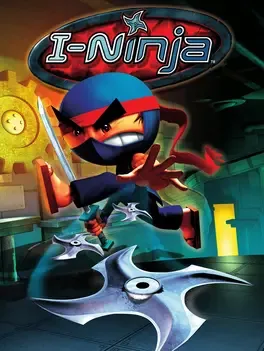
In the early 2000s, the 3D platforming genre was teeming with colorful mascots, but few possessed the raw energy and infectious attitude of I-Ninja. Developed by the renowned British studio Argonaut Software, this 2003 title brought a fresh, high-octane perspective to a crowded market. With its distinctive cel-shaded visuals and a protagonist who swapped traditional stealth for extreme sports-inspired acrobatics, I-Ninja stood out as a vibrant, fast-paced adventure that prioritized momentum and style over slow-paced puzzles. The game follows a spirited young hero whose skill with a blade is matched only by his expressive nature and refusal to back down from a fight.
The narrative of I-Ninja is rooted in a colorful, cartoonish world where our protagonist—clad in a signature blue suit and matching hooded mask—must save his master and the world from the malevolent Master O-Dor and his mechanized army of Ranx. While the title is simply known as I-Ninja globally with no significant alternative names, its singular identity reflects the focused and punchy nature of the character himself. The game’s aesthetic is heavily influenced by manga and anime, utilizing cel-shaded graphics to create a visual style that remains crisp and expressive decades later. Only the ninja’s eyes and expressive brow are visible, yet his personality shines through every combat animation and victory pose. Players traverse a diverse selection of locales, from lush tropical islands and mechanical fortresses to icy peaks, each rendered with a clean, Saturday-morning-cartoon look that distinguishes it from its contemporaries.
At its core, I-Ninja is an adrenaline-charged adventure that blends traditional combat with extreme sports mechanics. Our hero is the consummate warrior, having spent years mastering his weapons and honing his skills to perform gravity-defying feats. Combat is fluid, with the ninja wielding a pair of katana blades in both hands to slice through enemies in a flurry of sparks and steel. However, the true variety lies in the traversal. In true gravity-defying fashion, players can "shred" on extreme rails similar to a grind-rail mechanic, scale vertical buildings with ease, and use a unique "sword copter" technique to hover across massive gaps. The gameplay further diversifies with "roller spheres," where the ninja balances on a ball to navigate treacherous obstacle courses reminiscent of marble-rolling games. These specialized manga-style ninja moves allow for a dynamic flow where the player constantly transitions between high-speed platforming and frantic swordplay. The inclusion of an adrenaline meter allows players to unleash powerful abilities, adding a layer of cinematic flair to every encounter.
I-Ninja brought its unique brand of platforming action to multiple home consoles during the sixth generation of gaming.
While it didn't achieve the same commercial juggernaut status as some of its contemporaries, I-Ninja is remembered fondly as a cult classic. It was one of the final major projects from Argonaut Software, the legendary studio behind the original Star Fox and Croc. Critics praised its tight controls, varied mission types, and the charm of its protagonist. Its blend of high-speed traversal and combat preceded many trends in the action-platformer genre. For many gamers, it represents a peak era of creative experimentation where developers weren't afraid to mix different gameplay styles—from racing and rail-grinding to boss-level boxing—into a cohesive, high-energy package.
Despite being a ninja game, there is almost no emphasis on stealth, as the developers wanted to focus purely on "attitude" and action. The character's design is purposely minimalistic, focusing on his expressive eyes to convey emotion without a single word. Interestingly, the game features several boss battles that take place in entirely different gameplay genres, such as a first-person shooter segment or a giant robot boxing match. Furthermore, the use of cel-shading was a strategic choice to ensure the game looked distinctive among its platforming contemporaries on the hardware of the time, making it one of the most visually resilient titles of its era.
Games
Games