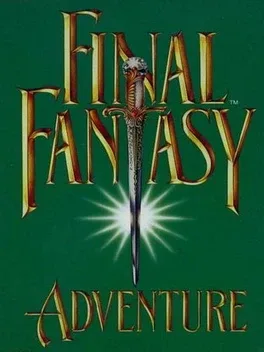
Final Fantasy Adventure\n\nIntroduction\nStory & Setting\nGameplay\nPlatforms\nLegacy\nFun Facts\n\n## Introduction\n\nIn 1991, a handheld title was released that would forever change the landscape of action role-playing games. Final Fantasy Adventure was more than just a spin-off; it was a bold experiment by Square that successfully married the narrative depth of traditional RPGs with the real-time intensity of action-adventure games. While the title suggests a direct lineage to the famous Final Fantasy series, Japanese audiences knew it as Seiken Densetsu: Final Fantasy Gaiden. In Europe, the title was rebranded as Mystic Quest, distinct from the SNES title of a similar name. This game served as the humble origin of what would eventually become the beloved Mana series, or Seiken Densetsu in Japan. Its unique blend of melancholic storytelling and accessible mechanics made it an instant classic for the original Game Boy hardware.\n\n## Story & Setting\n\nThe narrative begins in the heart of the Empire of Glaive, where a young gladiator-slave is forced into daily life-or-death battles for the amusement of the cruel Dark Lord. The atmosphere is grim and desperate until the hero’s best friend is mortally wounded during a fight. In his final moments, the friend reveals a vital secret: the world's survival depends on a pendant that grants access to the legendary Mana Tree. Driven by this new purpose, the hero escapes the Dark Knight’s castle, embarking on a quest to find the girl who holds this mysterious pendant. The journey takes the player across a vast, interconnected world featuring scorching deserts, frozen snowfields, murky lakes, and dense forests. As the hero discovers the girl has been kidnapped by the Dark Knight’s forces, the stakes rise from a simple escape to a grand battle against beasts and overlords to prevent the ultimate destruction of the world's life force.\n\n## Gameplay\n\nFinal Fantasy Adventure broke away from the turn-based tradition of its namesake, opting for a top-down, real-time combat system reminiscent of The Legend of Zelda. Players navigate a grid-based world, attacking enemies in real-time. However, the game retained heavy RPG elements, such as experience points, leveling up, and customizable stats. One of the standout features is the weapon variety; players are not restricted to just a sword. Throughout the quest, you obtain axes to chop down trees, sickles to cut through grass, and morning stars to break rocks, each doubling as a weapon and a tool for environmental progression. The game also features a variety of magic spells and a unique companion system where NPCs join the hero temporarily, providing specialized skills or healing. The \"Will\" meter adds another layer of strategy, charging up to allow for powerful specialized attacks when the bar is full.\n\n## Platforms\n\nThis game was originally released on the Game Boy and has since seen various iterations and ports that allow modern players to experience the beginning of the Mana saga.\n\n
\n\n## Legacy\n\nThe historical significance of Final Fantasy Adventure cannot be overstated. It was the genesis of the Seiken Densetsu (or 聖剣伝説) franchise, which would later produce the iconic Secret of Mana on the SNES. While it started as a \"Gaiden\" (side story) to the Final Fantasy brand, it quickly established its own identity characterized by emotional soundtracks and a focus on the Mana Tree. Its success proved that deep, action-oriented RPGs could thrive on portable hardware. The game has been remade twice—once as Sword of Mana for the Game Boy Advance and later as Adventures of Mana for mobile and PlayStation Vita—demonstrating the enduring appeal of its story and world-building.\n\n## Fun Facts\n\nDespite being part of a separate lineage, the game includes several Final Fantasy staples, including Chocobos and the recurring character Mog the Moogle. Interestingly, the European name Mystic Quest was chosen to avoid confusion with other RPGs, though it ironically led to more confusion later when Final Fantasy Mystic Quest was released. Another fascinating bit of trivia is that the game's soundtrack was composed by Kenji Ito, who became famous for his work on the SaGa series. The Japanese title 聖剣伝説 translates literally to \"Legend of the Sacred Sword,\" a name that would define one of Square's most successful intellectual properties for decades to come.