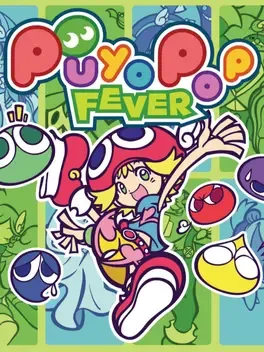
Puyo Pop Fever
Introduction
Puyo Pop Fever represents a significant turning point for one of the most beloved puzzle franchises in gaming history. While many Western players first encountered the series under localized guises such as Kirby's Avalanche or Dr. Robotnik's Mean Bean Machine, this entry—also known as Puyo Puyo Fever or Puyo Puyo 5—marked the beginning of a new era under the stewardship of Sega and Sonic Team. Released after the collapse of the original developer, Compile, Puyo Pop Fever (often called Puyo Puyo Fībā in Japan) revitalized the series with a vibrant new art style and a game-changing mechanic that would redefine high-level play. This title successfully bridged the gap between its classic arcade roots and a modern, character-driven experience, maintaining the soul of the franchise while pushing it into the future.
Story & Setting
Departing from the adventures of the previous protagonist, Arle Nadja, Puyo Pop Fever introduces a new heroine named Amitie. A student at the Primp Town Magic School, Amitie is an energetic girl who dreams of becoming a wonderful magic-user. The narrative kicks off when the school's teacher, Ms. Accord, loses her "Flying Cane," prompting a race among the students to recover it. The world of Primp Town is rendered in a distinct, "pop-art" hand-drawn style, moving away from the traditional pixel art of earlier entries. This fresh aesthetic choice gives the game a whimsical, storybook quality that complements its quirky cast of characters, including the mysterious Sig and the flamboyant Raffine, making it feel like a true Puyo Puyo 5 evolution.
Gameplay
At its core, the gameplay remains the addictive bubble-popping format fans adore: players must align four or more identically colored "Puyos" to clear them from the board and send "Nuisance Puyo" to their opponent's screen. However, Puyo Pop Fever introduces the titular Fever Mode. As players negate incoming Nuisance Puyos, they fill a "fever gauge" displayed on the screen. Once full, the player enters Fever Mode, where they are presented with pre-set chains that can be triggered with a single well-placed Puyo. This creates a frantic, high-stakes environment where a losing player can suddenly turn the tide with a massive offensive strike. While the game focuses heavily on the single-player campaign and competitive head-to-head mode, the exclusion of a four-player option in some versions was offset by the sheer depth and speed of the new mechanics.
This title saw a wide release across various home consoles and handhelds, ensuring its accessibility to a global audience across multiple regions.
Legacy
Puyo Pop Fever is often cited as the game that saved the series, proving that Sonic Team could handle the Puyo Puyo legacy with care. By introducing a new cast and a more modern visual identity, Sega successfully transitioned the franchise into the 21st century. The game’s influence is still felt today, as the "Fever" mechanic has become a staple in subsequent releases, including the popular crossover titles like Puyo Puyo Tetris. Its success ensured that the Puyo Puyo Fībā era would lead to decades of continued puzzle dominance in the Japanese market and a lasting cult following globally.
Fun Facts
- The game features a unique character-specific Puyo drop pattern, meaning different characters have different "strengths" in terms of the shapes of Puyo groups they receive during play.
- Despite the name change to "Fever," the game is internally and colloquially referred to as Puyo Puyo 5 by many long-time fans who tracked the development transition from Compile.
- The Western release on the GameCube is considered a collector's item due to its relatively low print run compared to other regions, while the Dreamcast version remains a fan favorite for purists.