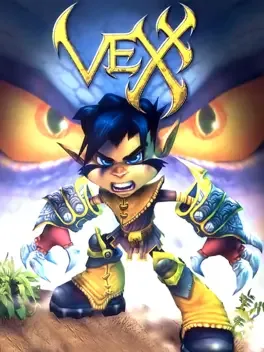
Vexx
Introduction
In the early 2000s, the 3D platformer genre was dominated by colorful mascots and lighthearted adventures. However, developer Acclaim Studios Austin decided to take a different path with the release of Vexx. This title brought a darker, more visceral edge to the genre, trading whimsical power-ups for razor-sharp combat and a gritty atmosphere. As one of the more unique entries of its era, Vexx challenged players with its intricate world design and unforgiving difficulty. Unlike its peers, it didn't just ask players to jump; it asked them to fight for survival in a crumbling world. Today, it remains a fascinating snapshot of an era where developers were pushing the boundaries of what a mascot platformer could be, offering a mature alternative to the standard genre tropes.
Story & Setting
The narrative of Vexx is one of tragedy and righteous fury. The story unfolds on the fractured world of Astara, where the peaceful villagers of Rockhaven have been brutally enslaved by the malevolent Dark Yabu and his Shadowraith minions. During the invasion, Vexx's grandfather is murdered, leaving the young protagonist with nothing but a burning desire for vengeance. In his desperation, Vexx discovers the Astani War Talons—ancient, powerful weapons that bond to his hands. With these claws, he gains the strength to stand against the darkness. The journey takes Vexx through a variety of surreal and hostile environments, ranging from sweltering volcanic islands and desolate desert temples to frozen citadels and towering giants' castles. Each location is a remnant of a broken world, teeming with environmental hazards and servants of Yabu, all designed to prevent Vexx from reaching his ultimate goal: the final confrontation with the Shadowraith leader.
Gameplay
At its heart, Vexx is an exploration-based platformer that emphasizes verticality and combat. The core objective is to collect Wraith Hearts, which act as the keys to unlocking new areas and progressing through the game. What sets Vexx apart is its focus on the Astani War Talons. These are not just for show; they provide a deep combat system including combos, juggles, and special attacks that evolve as the player progresses. Movement is equally vital, as Vexx can perform wall jumps, long jumps, and climb various surfaces using his claws. A standout mechanic is the dynamic day and night cycle. As time passes, the environment shifts. When darkness falls, the enemies become significantly more aggressive and powerful, and certain environmental hazards may change. This adds a layer of strategy to exploration, as players must decide whether to tackle certain platforming challenges under the safety of the sun or risk the nocturnal dangers for specific rewards. It requires a mastery of both combat skills and climbing moves to navigate the hostile terrain.
This game was released on several major gaming consoles of the sixth generation, ensuring a wide audience could experience Vexx's journey.
Legacy
Vexx occupies a unique space in gaming history. Released during a time when Acclaim Entertainment was facing significant financial turmoil, the game was intended to be the start of a new flagship franchise. While it didn't achieve the blockbuster sales of a Mario or Sonic title, it earned a dedicated cult following. Critics praised its ambitious world design and fluid movement, though some found its high difficulty and camera system frustrating. Over the years, the game has been remembered for its dark aesthetic and the lost potential of a cancelled sequel. For many, Vexx represents a bold experiment in the platforming genre that prioritized edge and atmosphere over the standard family-friendly tropes of the time, proving that mascot-led games could handle more mature themes.
Fun Facts
Despite being a new IP, Vexx drew heavy inspiration from the structure of Super Mario 64, specifically in how players enter levels through a central hub. One of the game's most interesting trivia points is that the development team put a massive amount of effort into the sound design; the game features a cinematic orchestral score that was quite advanced for a platformer in 2003. Another interesting note is that there are no alternative names for this game, as it was marketed consistently as Vexx across all global territories. While a sequel was planned and even entered early production, it was ultimately scrapped when Acclaim went bankrupt in 2004, leaving Vexx's story as a standalone cult classic. Furthermore, the game's day-night cycle was a revolutionary feature for platformers at the time, influencing how world states could change dynamically.