Final Fantasy X-2
Introduction
When Final Fantasy X-2, often referred to by fans as FFX2 or FF10-2, was first announced, it sent shockwaves through the gaming community. As the first direct sequel in the history of the mainline series, it broke long-standing traditions and took a bold new direction. Released by Square Enix, the game shifted from the somber, existential pilgrimage of its predecessor to a high-energy, pop-infused adventure. This transition was marked by a vibrant aesthetic and a spirited tone that celebrated the liberation of its world. FINAL FANTASY X-2 was not just a continuation of a story; it was a stylistic departure that emphasized fun, fashion, and female empowerment, featuring the first all-female playable party in the franchise.
Story & Setting
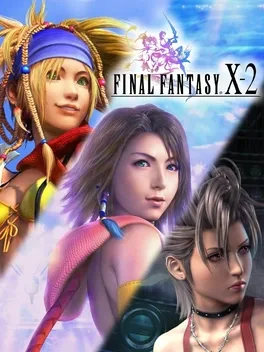
Set two years after the defeat of Sin and the beginning of the Eternal Calm, the world of Spira has changed dramatically. No longer living under the shadow of a cycle of destruction, the people have split into various factions, most notably the New Yevon party and the Youth League. Our protagonist, Yuna, has transformed from a dutiful summoner into a high-spirited sphere hunter. Alongside her friends Rikku and the stoic newcomer Paine, they form the Gullwings. The narrative of Final Fantasy 10-2 kicks off when Yuna sees a mysterious movie sphere containing an image of a man resembling her lost love, Tidus. This discovery propels the trio across the globe to uncover the truth behind the sphere and the ancient weapon known as Vegnagun, which threatens the newly found peace. The journey is one of personal discovery and political intrigue, as the girls navigate a world trying to define its future without the guidance of the temples.
Gameplay
The gameplay of FF10-2 reintroduced a beloved mechanic not seen in the main series since Final Fantasy V: the job system. In this iteration, jobs are known as Dresspheres. By using the Garment Grid, players can swap Dresspheres in the heat of battle, allowing Yuna, Rikku, and Paine to change their classes—such as Warrior, Thief, or White Mage—on the fly to adapt to any situation. This adds a layer of strategic depth and dynamism to the combat. Furthermore, the game saw the return of the Active Time Battle (ATB) system, which was absent in Final Fantasy X. This made combat feel significantly faster and more fluid. Progression is notably non-linear; players use the airship Celsius to travel to any location in Spira right from the start of each chapter. This structure encourages exploration, completion of various minigames, and numerous sidequests, which are essential for those aiming to see the game's multiple endings.
This game was released on several platforms, including the PlayStation 2 across different regions such as PAL, NTSC-J, and NTSC-U.
Legacy
The legacy of Final Fantasy X-2 is complex and significant. It proved that direct sequels could be commercially viable for the franchise, paving the way for later titles like the Final Fantasy XIII trilogy. While the tonal shift was polarizing for some fans of the original, the game was praised for its refined combat system, which many still consider one of the best implementations of the ATB mechanic. The later release of Final Fantasy X-2 International + Last Mission (or simply Final Fantasy X-2 International) added even more content, including the Creature Creator and a roguelike dungeon, further cementing its status as a feature-rich experience. This version, specifically Final Fantasy 10-2 International + Last Mission, remains the definitive way to experience the title, providing a bridge between the main story and the broader lore of the Spira universe.
Fun Facts
- Final Fantasy X-2 was the first game in the series to feature a completely female playable cast.
- The game features multiple endings, including a 'Perfect Ending' that requires 100% story completion.
- The 'Last Mission' segment was originally exclusive to the Japanese Final Fantasy X-2 International release before being localized years later in the HD Remaster.
- Yuna's pop-star outfit and the iconic 'Real Emotion' opening sequence were designed to showcase the new, upbeat direction of Spira.
- The game’s non-linear chapter structure was a major departure from the traditional 'road trip' style of the previous game.