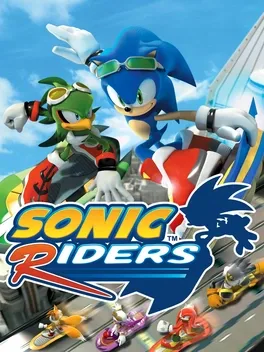
Sonic Riders
Introduction
Sonic Riders represents a unique chapter in the long-running Sonic the Hedgehog franchise. Released as a cornerstone of the series' 15th-anniversary celebration, it served as the fourth dedicated racing title, following the legacy of Sonic Drift, Sonic Drift 2, and the experimental Sonic R. In Japan, the game is known as ソニックライダーズ, while South Korean audiences recognized it as 소닉 라이더즈. It was a bold step for Sega, moving away from traditional foot-racing to introduce "Extreme Gear"—highly advanced hoverboards that allowed Sonic and his friends to soar through futuristic environments at breakneck speeds. This title was not just another racer; it was a stylistic overhaul that introduced fans to a new subset of the Sonic universe, blending high-tech aesthetics with the series' signature sense of momentum.
Story & Setting
The plot of Sonic Riders kicks off when the villainous Dr. Eggman announces a World Grand Prix, ostensibly to find the fastest racer in the world. The prize for winning the competition is all seven Chaos Emeralds, a lure that Sonic, Tails, and Knuckles cannot ignore. However, the real motivation behind the tournament is much deeper. It serves as an introduction to the Babylon Rogues, a trio of legendary thieves: Jet the Hawk, Wave the Swallow, and Storm the Albatross. These avian rivals are the descendants of an ancient civilization known as the Babylonians. As the competition heats up, the racers discover that the Grand Prix is actually a ruse to help the Rogues locate the ancient Treasure of Babylon. This narrative blend of high-speed competition and archaeological mystery gave the game a distinct feel compared to the standard world-saving plots found in previous Sonic adventures.
Gameplay
The gameplay of Sonic Riders is built around the "Extreme Gear" mechanic, which provides a steep learning curve but a high skill ceiling. Instead of traditional acceleration, players must manage an "Air" gauge. Air acts as fuel for the board; it is consumed as you race and use boosts. If the gauge empties, the character must run on foot until they can find an "Air Pit" to refuel. One of the most innovative features is the Turbulence system. When a racer reaches high speeds, they leave a trail of wind behind them. Other racers can enter this "Turbulence" to perform tricks and gain massive speed without consuming their own air gauge.
Characters are split into three distinct classes: Speed, Fly, and Power. Speed types can grind on rails, Fly types can use flight rings to skip sections of the track, and Power types can destroy certain obstacles to create shortcuts. Managing these class-specific abilities while navigating the game’s 16 complex tracks—and performing mid-air tricks—creates a frantic and rewarding experience. Players could also unlock the E-10000 series of robots, further expanding the playable roster and providing more variety for competitive play.
Sonic Riders enjoyed a wide release during the peak of the sixth-generation console era, allowing fans across various ecosystems to enjoy the experience.
Legacy
The game left a lasting impact on the franchise, both for its mechanics and its historical timing. It was the final Sonic the Hedgehog game to be released for the Nintendo GameCube and the original Microsoft Xbox, marking the end of an era for those platforms. Its success led to a dedicated trilogy of titles, followed by Sonic Riders: Zero Gravity in 2008 for the Wii and PlayStation 2, and later Sonic Free Riders in 2010, which utilized the Kinect for Xbox 360. While the series eventually went dormant, the Babylon Rogues have remained fan-favorite characters, appearing regularly in the IDW comics, various Olympic spin-offs, and other mobile Sonic titles, cementing their place in the series' lore.
Fun Facts
- During its initial launch window, the Microsoft Xbox version was specifically marketed with a free Sonic X DVD included in the box, making it a prized item for collectors today.
- The game was released specifically to celebrate the 15th anniversary of the original Sonic the Hedgehog game, which is why several classic references are hidden throughout the tracks.
- The character Wave the Swallow was designed to be a mechanical genius, serving as a direct rival to Tails, which added a competitive dynamic to the series' technical experts.