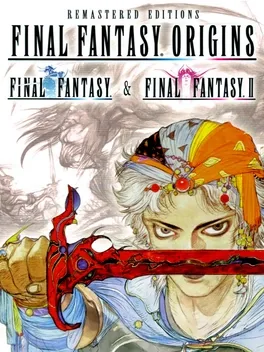
Final Fantasy Origins
Introduction
Before the modern era of high-definition graphics and sprawling open worlds, the Final Fantasy series began as a desperate gamble that eventually saved its developer. Final Fantasy Origins acts as a definitive gateway to those humble, pixelated beginnings. Released as a comprehensive compilation of the first two entries in the legendary franchise, this collection—often referred to by fans simply as FF Origins—provides players with a polished window into the foundations of the JRPG genre. Originally released in Japan as the Final Fantasy I and II Premium Package, or sometimes referred to as the Final Fantasy I+II Premium Package, this release redefined how classic games could be preserved and updated for a new generation of consoles. By blending the charm of the 8-bit era with the technological capabilities of the 32-bit era, it remains a touchstone for series historians.
Story & Setting
The collection spans two distinct narratives that established many of the tropes used in fantasy storytelling today. In the first Final Fantasy, players take control of the four nameless Warriors of Light, each carrying a darkened crystal. Their quest is to restore light to these orbs and save a world teetering on the edge of elemental collapse, eventually facing the dark knight Garland in a loop through time.
In contrast, Final Fantasy II offers a significantly more character-driven story for its time. It follows three orphans—Firion, Maria, and Guy—as they join a resistance movement against the oppressive Palamecian Empire. This sequel shifted the focus from world-saving myth to a gritty tale of rebellion and loss, famously introducing the recurring character "Cid" and the beloved Chocobo birds, setting the stage for the narrative depth the series would eventually become known for.
Gameplay
While both games are turn-based RPGs, they feature vastly different systems that show the experimental nature of early Square development. Final Fantasy I uses a traditional experience-based leveling system where players choose their party's classes at the start of the adventure. In contrast, Final Fantasy II utilizes an unconventional "activity-based" progression system; characters improve their stats based on their specific actions in battle. For example, taking damage increases HP, while using magic increases mana capacity.
This PlayStation remaster introduced several "Quality of Life" improvements to these systems, including enhanced 16-bit style graphics reminiscent of the Super Nintendo era, remastered soundtracks by the legendary Nobuo Uematsu, and impressive FMV (Full Motion Video) cinematic sequences. It also added a "Bestiary" to track defeated monsters and a "Memo Save" function to make the high difficulty of these early titles more manageable for modern audiences.
This game was released on several platforms, including the original PlayStation and later digital storefronts for portable and legacy home consoles.
Legacy
The legacy of Final Fantasy Origins is significant because it marked the first time Western audiences could officially play the original Final Fantasy II. While the first game had been released on the NES in North America, the sequel remained exclusive to Japan for over a decade. Origins proved that there was a massive global appetite for "retro" remasters, paving the way for future collections like Final Fantasy Anthology and the more recent Pixel Remaster series. It is celebrated for maintaining the integrity of the original difficulty while offering an "Easy Mode" for those who want to focus purely on the historical narrative.
Fun Facts
- The North American version of FF Origins was the first time Final Fantasy II was translated into English officially by Square.
- The collection includes an extensive gallery featuring the ethereal concept art of Yoshitaka Amano, which was previously hard to find outside of Japan.
- In its Japanese release as the Final Fantasy I and II Premium Package, the game was sold in a limited edition box set that included collectible figurines of the characters.
- The game includes a "Collection" menu where players can unlock art and cinematic movies by completing specific in-game milestones.