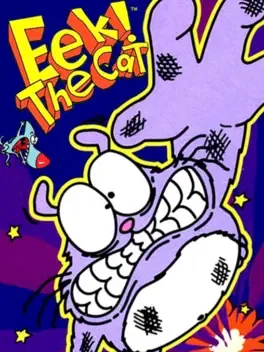
Eek! The Cat
Introduction
During the early 1990s, Saturday morning cartoons were a cultural phenomenon, and few characters embodied the chaotic, well-meaning energy of the era like Eek! The Cat. Created by Bill Kopp, the purple, round-bellied feline became a cult favorite for his unyielding optimism in the face of absolute disaster. In 1994, Ocean Software brought this frantic energy to the 16-bit era with the release of Eek! The Cat on the Super Nintendo Entertainment System. This title invited fans to step into the paws of the world’s most helpful cat, proving once and for all that while it might not hurt to help, it certainly leads to a lot of "bonks," "zaps," and "splats."
Story & Setting
The game perfectly captures the absurd narrative structure of the animated series. Rather than one continuous journey, the game is divided into six hilarious and hair-raising adventures that mirror the show's episodic nature. Players find themselves navigating a variety of zany locales—from the suburbs to deep space—all while trying to maintain Eek's mantra: "It never hurts to help."
The stakes are high as Eek attempts to rescue his beloved (and much larger) girlfriend, Annabelle, from loony aliens who have whisked her away. The chaos doesn't stop there; Eek must also work to reunite the brave Pierre with his fellow Squishy Bear brothers, save a sleepwalking Granny from a series of dangerous accidents at a local zoo, and help catch a runaway Christmas present for Joey the orphan. Throughout these ordeals, Eek must constantly contend with his arch-nemesis, Sharky the Sharkdog, a creature whose primary goal in life is to see Eek flattened.
Gameplay
Eek! The Cat distinguishes itself from typical 16-bit platformers by focusing heavily on escort mechanics. While Eek is the player-controlled character, the primary objective is often to protect an NPC (Non-Player Character) who is wandering aimlessly through the environment. Whether it is nudging Annabelle away from a pit or clearing a path for a sleepwalking Granny, the player must use Eek’s body to absorb damage and manipulate the environment.
Eek himself is incredibly resilient. Drawing from the "cartoon physics" of the source material, Eek doesn't lose lives in the traditional sense when he takes a hit. Instead, he gets squashed, stretched, or electrocuted in comical ways, which temporarily slows him down. The real challenge lies in the health and safety of the character Eek is trying to help. To navigate the six adventures, players must master the art of timing and environmental interaction, using Eek’s tail and limited offensive moves to fend off enemies and hazards. The game’s difficulty often stems from the unpredictable movements of the NPCs, requiring quick reflexes and a good sense of humor.
This game was released on the Super Nintendo Entertainment System, bringing the vibrant colors and frantic animation of the cartoon to home consoles across both North American and European markets.
- SUPER NINTENDO ENTERTAINMENT SYSTEM: PAL, NTSC-U
Legacy
While Eek! The Cat may not be as widely cited as the genre-defining platformers of its time, it remains a cherished piece of 90s nostalgia. Developed by Ocean Software—a studio renowned for their prolific work with licensed properties—the game is remembered for its faithful recreation of the show’s art style and slapstick humor. It stands as a testament to a time when developers experimented with unique gameplay loops, such as the escort-style platforming, to better fit the personality of a licensed character. For fans of the Fox Kids era, the game is a vibrant time capsule of Bill Kopp’s unique comedic vision.
Fun Facts
- The game features the iconic voice-like grunts and sound effects that fans would recognize from the TV show, adding an extra layer of authenticity.
- Eek’s girlfriend, Annabelle, is a parody of the "damsel in distress" trope, though her sheer size often makes her more of an environmental hazard than a victim.
- The "Squishy Bears" featured in the game are a direct parody of the Care Bears, maintaining the show’s tradition of satirizing other popular 80s and 90s cartoons.
- Sharky the Sharkdog appears frequently as a boss-like obstacle, requiring players to put Eek's "nine lives" on the line to get past him.