Introduction
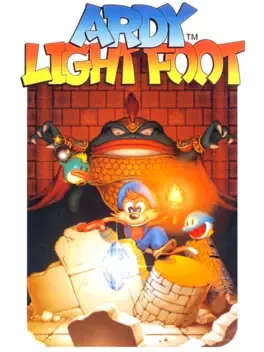
In the crowded landscape of 16-bit platformers, few titles capture the whimsical yet slightly melancholic atmosphere of the early 90s quite like Ardy Lightfoot. Developed by ASCII and released during the height of the Super Nintendo’s popularity, this charming side-scroller—often documented as Ardy Light Foot in various regions—is a masterclass in creative character design and tight mechanical execution. While it may not have reached the household-name status of a plumber or a blue hedgehog, Ardy’s journey is one that resonates with fans of the genre for its unique aesthetic and heartfelt adventure. It stands as a testament to the era when developers were constantly experimenting with how to make a mascot truly stand out in a competitive market.
Story & Setting
The world of Ardy Lightfoot is a vibrant land currently under the shadow of a grand legend and a looming threat. The narrative revolves around the Sacred Rainbow, a powerful artifact that has shattered into seven distinct pieces. According to ancient lore, whoever manages to retrieve all seven shards will be granted a single wish. This promise of ultimate power has attracted the attention of the villainous King Visconti. Having already secured one piece, Visconti is ruthlessly hunting for the remaining six, dispatching his loyal henchmen and various creatures to scour the land.
Ardy, an anthropomorphic creature with fox-like features, takes it upon himself to stop the king and restore the rainbow. Along his journey, Ardy encounters a colorful cast of characters. He is supported by the wise Elder, a kind-hearted girl named Nina, and a mysterious, dashing adventurer known as Don Jacoby. However, the path is fraught with danger, as Visconti’s lackeys—specifically the recurring antagonists Beecroft and Catry—constantly attempt to thwart Ardy’s progress. The setting shifts from lush forests and ancient ruins to more surreal and dangerous locales, keeping the stakes high as Ardy races toward the final confrontation.
Gameplay
At its core, Ardy Lightfoot is a precision platformer that distinguishes itself through the use of a companion mechanic. Ardy is rarely alone; he is accompanied by his best friend, a small blue creature named Pec. Pec is not just a cosmetic addition; he is Ardy’s primary tool for survival. Players can throw Pec at enemies to defeat them, use him as a temporary bridge to cross gaps, or even utilize him as a shield against incoming projectiles. If Ardy loses Pec, he becomes significantly more vulnerable, emphasizing the bond between the two characters.
Ardy himself is quite agile. His most iconic move is his tail-bounce, which allows him to jump on enemies or reach higher platforms, similar to the pogo-stick mechanic found in titles like DuckTales. The level design is diverse, featuring environmental puzzles that require clever use of Pec and Ardy’s physical abilities. Boss encounters are a highlight, often requiring the player to observe patterns and use the environment to overcome Visconti's giant machines and elite soldiers. The difficulty curve is fair but challenging, rewarding players who master the synergy between the protagonist and his round, blue companion.
This game was released on several platforms within the Nintendo ecosystem, primarily targeting the Japanese and Western markets during the mid-90s.
Legacy
Ardy Lightfoot is frequently cited by retro gaming enthusiasts as a "hidden gem" of the Super Nintendo library. While it didn't spark a long-running franchise, it is remembered for its high-quality animation and expressive character sprites, which many compared to the quality of animated films of the time. The game's legacy lives on through the speedrunning community and collectors who seek out the original cartridges. Its blend of high-stakes fantasy storytelling and experimental platforming mechanics helped it maintain a cult following long after the 16-bit era came to a close. It remains a point of interest for those exploring the history of ASCII and the evolution of Japanese platforming games.
Fun Facts
- In the North American version of the game, several scenes were edited to remove elements considered too dark for a younger audience, including the fate of certain side characters.
- The character Pec is actually a species known as a "Cat-Ball," though his abilities make him feel more like an magical multi-tool than a pet.
- Despite being published by Titus in the West—a company often criticized for lower-quality titles—Ardy Lightfoot is widely regarded as one of the best games in the Titus SNES catalog because it was developed internally by the talented team at ASCII.
- The mysterious Don Jacoby is often seen as a parody of Indiana Jones, complete with a fedora and a penchant for treasure hunting.