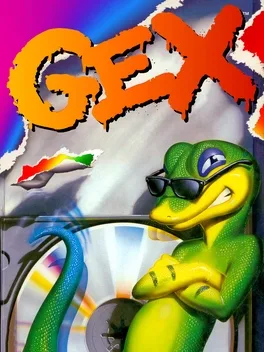
Gex
Introduction
In the mid-1990s, the video game industry was in a frantic search for the next iconic mascot with attitude to compete with the likes of Sonic the Hedgehog and Mario. Into this landscape, Crystal Dynamics introduced Gex, a tail-whipping, wall-crawling gecko who quickly became a standout figure of the era. Originally serving as a flagship title for the 3DO before branching out to other major consoles, Gex offered a unique blend of tight platforming and sharp pop-culture satire. During its early development and in certain regional contexts, the game was also known as Gecko X. With his snarky personality and an endless stream of television-inspired quips, Gex provided a meta-commentary on the media-saturated culture of the time, securing his place as one of the most memorable characters of the 32-bit generation.
Story & Setting
The plot of Gex centers on the title character, a gecko who has retreated from society to spend his days in a darkened mansion doing nothing but watching television and eating snacks. This sedentary existence is shattered when the villainous Rez, a metallic overlord of the Media Dimension, kidnaps him. Rez intends to turn Gex into the dimension's new mascot, trapping him within the electronic world of the television itself. To escape this digital purgatory, Gex must navigate through various channels—themed worlds based on popular TV genres like horror movies, classic cartoons, and martial arts films. Throughout his journey, Gex must hunt for hidden television remotes that serve as keys to unlock higher-level channels and eventually lead him to a final showdown with Rez to win back his freedom.
Gameplay
Gameplay in Gex is characterized by its creative use of reptilian abilities within a traditional 2D platforming framework. While Gex can jump and perform a signature tail whip attack to dispatch enemies, his most innovative feature is his use of suction cups. This allows him to adhere to walls and ceilings, enabling players to explore levels from entirely new perspectives and find secrets tucked away in the rafters. This mechanic was a significant departure from the standard left-to-right movement found in most contemporary platformers. Gex also utilizes his long, sticky tongue to snatch power-ups from a distance. These pickups are often represented as flies which, when consumed, grant Gex temporary elemental abilities like fire-breathing or ice-breathing, as well as health and speed boosts. The levels are meticulously designed to reflect their television themes, requiring players to kill TVs and search for remotes while dodging genre-specific obstacles. The experience is elevated by the voice work of comedian Dana Gould, whose frequent one-liners keep the tone light and humorous.
This game was released on several platforms, including the PlayStation, Sega Saturn, and later digital versions for modern handhelds.
Legacy
Gex holds a special place in history as one of the most successful mascot-driven platformers not created by a first-party developer. Its success paved the way for two 3D sequels, Gex: Enter the Gecko and Gex 3: Deep Cover Gecko, which further expanded the series' penchant for movie parodies. Although the character has been dormant for years, the original Gex remains a cult classic. Its sharp writing, unique climbing mechanics, and vibrant visuals are often cited by fans as highlights of 1990s gaming. The game is frequently revisited by those who appreciate its specific brand of humor and the way it captured the spirit of pop culture.
Fun Facts
- The character of Gex was originally voiced by Dana Gould in North America, but the European release featured actor Leslie Phillips, giving the gecko a suave, sophisticated British persona.
- Early promotional materials and development builds referred to the character as Gecko X before the title was shortened to the punchier Gex.
- The game was a technical showcase for its time, utilizing multiple layers of parallax scrolling to create a sense of depth in its 2D environments.
- Gex's obsession with television was a reflection of the developers' desire to create a character that felt relatable to the first generation of children raised entirely on cable TV.
- Each world contains numerous hidden areas and secret remotes, many of which require mastery of the wall-crawling mechanic to reach.