Found 2 item(s) for sale
-
Games
Send a Message to
-
Send a Message to
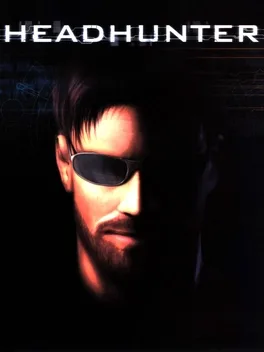
Released at the dawn of a new millennium, Headhunter stands as a definitive example of the cinematic action-adventure genre that dominated the turn of the century. Developed by the Swedish studio Amuze, the game arrived as a technical showcase, pushing the boundaries of what home consoles could achieve in terms of narrative presentation and atmospheric world-building. For many fans of the era, it served as a European answer to the growing popularity of stealth-action blockbusters, blending high-octane vehicular traversal with tense, tactical on-foot combat. With its gritty aesthetic and Hollywood-inspired production values, Headhunter remains a fascinating relic of a time when developers were eagerly experimenting with the intersection of cinema and interactive entertainment.
The narrative of Headhunter transports players to a dystopian early 21st century where the traditional concept of law and order has completely collapsed. In this near-future setting, gang warfare and rampant crime have necessitated the creation of the Anti-Crime Network (ACN), a powerful privatized law enforcement organization. This agency employs elite bounty hunters known as Headhunters to track and neutralize the world’s most dangerous fugitives. Players take on the role of Jack Wade, once a legendary cop and the top Headhunter in the business. The game opens with a heart-pounding sequence as Jack wakes up strapped to an operating table, escapes a mysterious facility, and subsequently collapses in an alleyway. When he awakens in a hospital from a coma, he finds his memory fractured and his prestigious license revoked. Jack is soon approached by Angela Stern, the daughter of the recently murdered founder of the ACN. Hired to find her father’s killer, Jack must navigate a web of corporate conspiracy and urban decay to reclaim his past and uncover the truth behind his own abduction.
Headhunter features a multifaceted gameplay loop that alternates between high-speed exploration and intense third-person action. The game is primarily viewed from an over-the-shoulder perspective, complemented by a sophisticated radar system in the top right of the screen that tracks both Jack and his enemies. On foot, the mechanics emphasize tactical positioning; Jack can duck, roll, and manipulate his environment by pushing or pulling objects. A key feature is the ability to flatten against walls, allowing Jack to peek around corners and ambush enemies from behind cover. Progression is tied to the Law Enforcement Intelligence and Licence Approval (LEILA) system. Because Jack has lost his memories and status, players must visit the LEILA facility to complete VR simulator challenges. These trials test combat, stealth, and driving skills, and are required to earn the higher-grade licenses necessary to access new weapons, gadgets, and restricted areas of the city. Between these missions, the gameplay shifts to an open-city format where Jack utilizes his signature motorcycle. This traversal mode requires players to earn skill points by driving skillfully through traffic to reach various mission destinations dictated by the evolving clues of the investigation.
This game was released on several platforms, including the Sega Dreamcast and the Sony PlayStation 2.
Headhunter is often cited as one of the most ambitious titles released during the twilight of the Dreamcast's lifecycle. While it faced stiff competition from other stealth-action giants of the time, it carved out a dedicated following thanks to its unique European flair and its seamless integration of different gameplay styles. It was particularly lauded for its high production values, specifically its epic orchestral score. The game’s success on the Dreamcast in PAL territories eventually led to its porting to the PlayStation 2, which introduced Jack Wade’s story to a much broader audience in North America. Today, it is remembered as a cult classic that paved the way for Amuze to develop a sequel, Headhunter: Redemption, further expanding the lore of the ACN.
One of the most remarkable aspects of Headhunter is its musical score, composed by Richard Jacques. In a rare move for the time, the soundtrack was recorded by a full live orchestra at the world-famous Abbey Road Studios in London, giving the game a truly blockbuster feel. Additionally, despite its North American association with the PlayStation 2, the game was originally intended to be a major flagship title for the Dreamcast, making it one of the last 'must-have' titles for Sega's final console in Europe. While the game does not have any major alternative names, it is frequently compared to the Metal Gear Solid series due to its emphasis on cinematic storytelling and stealth-based mission design.
Games