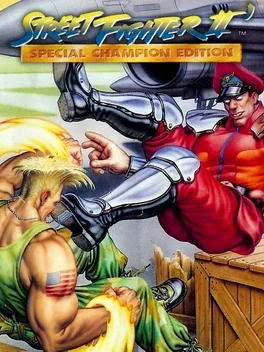
Street Fighter II: Special Champion Edition
Table of Contents
Introduction
When the arcade fighting game boom hit in the early 1990s, Sega Genesis owners felt a pang of jealousy as their rivals on the Super Nintendo enjoyed early ports of the World Warrior phenomenon. That changed in 1993 with the release of Street Fighter II: Special Champion Edition. This wasn't just a simple port; it was a comprehensive package that brought the "Champion Edition" and "Hyper Fighting" upgrades to Sega’s 16-bit powerhouse. Whether you knew it as Street Fighter II': Special Champion Edition in the West or Street Fighter II Dash Plus in Japan, the game was a technical milestone. Often abbreviated by fans as SFII: SCE, it provided a robust alternative to the arcade experience, finally giving Genesis fans a reason to brag about their console's speed and arcade-accurate mechanics.
Story & Setting
The game takes place in the global arena of the second World Warrior tournament. Organized by the mysterious and malevolent leader of the Shadaloo criminal syndicate, M. Bison, the tournament invites the strongest fighters from across the globe to compete. Each character enters with their own unique motivations and backgrounds. Ryu seeks to test his skills against the best, Chun-Li hunts for justice regarding her father’s death, and Guile seeks revenge for his fallen comrade. The setting spans the globe, from the bustling streets of China and the docks of the USA to the temples of Japan and the jungles of Brazil. In this specific version, the "STREET FIGHTER II': SPECIAL CHAMPION EDITION" narrative expands as the four grand masters—Balrog, Vega, Sagat, and M. Bison—become playable protagonists (or antagonists) in their own right, rather than just being unplayable end-game hurdles.
Gameplay
The core mechanics of Street Fighter II: Special Champion Edition were refined to include features from the "Turbo" arcade update. Players can choose between "Group" (Champion Edition style) and "Hyper" (Turbo style) modes. In Hyper mode, the game speed can be adjusted across several stars, significantly increasing the pace of combat. Also referred to as Street Fighter II' Plus or Street Fighter II′ Plus, the game features a roster of 12 characters. The original eight world warriors are joined by the four playable bosses, each equipped with their full array of special moves.
A significant aspect of the gameplay on the Genesis was the controller support. While playable with a standard three-button pad (using the Start button to toggle between punches and kicks), the game was best experienced with Sega’s dedicated six-button controller. This allowed for the authentic arcade layout: three strengths of punches and three strengths of kicks. The tight controls and high-speed "Hyper" gameplay options ensured that matches remained intense and competitive, solidifying its reputation as one of the best fighters on the system.
Street Fighter II: Special Champion Edition was originally tailored for the Sega Mega Drive and Genesis hardware, but it has since seen releases on other digital services.
Legacy
The legacy of Street Fighter II: Special Champion Edition is defined by its role in the 16-bit console wars. It was a massive 24-megabit cartridge, which was enormous for the time, allowing Capcom to pack in as much of the arcade's sound and animation as possible. While the SNES version had a richer color palette, the Genesis version was often praised for its faster gameplay and the superior feel of the six-button controller. It proved that Sega’s hardware could compete at the highest level of arcade conversions. Today, it remains a beloved entry for retro enthusiasts and is frequently included in "mini" console collections and digital compilations, standing as a testament to the era when Capcom ruled the fighting game genre.
Fun Facts
Interestingly, Capcom originally planned to release a straight port of "Champion Edition" for the Genesis. However, after seeing Nintendo’s "Turbo" version, they delayed the project to add the speed-adjusting features and "Hyper Fighting" mechanics, resulting in the "Special" branding. In Japan, the title was marketed with the unique branding Street Fighter II Dash Plus. Another interesting trivia point is that this game was the first 24-megabit cartridge for the Mega Drive/Genesis, a size that was heavily advertised on the box to emphasize its graphical fidelity. Even the logo underwent changes, with some marketing materials using the all-caps STREET FIGHTER II': SPECIAL CHAMPION EDITION to differentiate it from its predecessors.