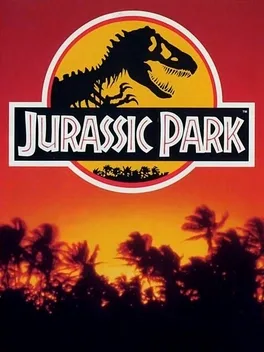
Jurassic Park
Table of Contents
Introduction
When Jurassic Park stomped into theaters in 1993, it changed cinema forever. Naturally, a wave of video game adaptations followed, but few captured the imagination of gamers quite like the version released for the SEGA Mega Drive/Genesis. Developed by Blue Sky Software, this title wasn't just another platformer; it was a groundbreaking action-adventure that allowed players to experience the terror of Isla Nublar from two diametrically opposed perspectives. Whether you wanted to survive the prehistoric onslaught as a human or become the apex predator yourself, this game delivered a gritty, atmospheric experience that remains a standout in the 16-bit era.
Story & Setting
The game is set on the treacherous Isla Nublar, following the disastrous events of the first film where the park's security systems fail and the dinosaurs break free. The narrative unfolds through two lenses. In the primary campaign, players step into the boots of Dr. Alan Grant. His objective is simple yet harrowing: navigate the dangerous jungle, power plants, and volcanic caves to reach the Visitor Center and call for rescue. On the flip side, players can choose to play as a Velociraptor (presumably 'The Big One' mentioned in the film). The Raptor's story is one of primal survival and pursuit, as she hunts down Grant through the same environments, eventually seeking her own escape from the island's confines.
Gameplay
The defining feature of Jurassic Park on the Genesis is its dual-gameplay system. Grant is the default character, but can be changed using the 'Player' option on the game's main menu to switch to the raptor, effectively offering two games in one. Playing as Dr. Grant provides a traditional action-platformer experience with a survival twist. Grant is equipped with a variety of weapons, including tranquilizer darts, gas grenades, and flashbangs. Unlike many action heroes of the time, Grant's arsenal is focused on neutralizing threats rather than just mindless destruction, though the challenge remains high as he faces off against Dilophosaurs, Triceratops, and the ever-looming T-Rex. In contrast, the Velociraptor campaign is a fast-paced, visceral experience. As the Raptor, players rely on agility and brute force. You can jump significant heights, lunge at enemies, and use claws and teeth to take out Ingen security guards and other dinosaurs. The Raptor’s levels mirror Grant’s but require different strategies to navigate, focusing more on verticality and predatory speed. This duality ensured that the game had immense replay value, as each character required a completely different mastery of the controls and environment.
This game was released on several platforms, including the Sega Mega Drive/Genesis across different regions.
Legacy
Jurassic Park on the SEGA Genesis is often remembered as one of the best movie-to-game adaptations of its time. While the Super Nintendo version opted for a top-down perspective, the Genesis version leaned into gritty side-scrolling action. It was praised for its impressive digitized graphics and a moody soundtrack that heightened the tension. It paved the way for a sequel, Jurassic Park: Rampage Edition, which doubled down on the action elements. Today, it remains a cult classic, frequently cited by retro gaming enthusiasts for its bold choice to let players "play as the monster" long before it was a common industry trope.
Fun Facts
- The game was developed by Blue Sky Software, the same team behind the visually stunning Vectorman series.
- While the game is based on the movie, many of the environments, such as the Pump House and the Volcano, draw inspiration from Michael Crichton’s original novel.
- The Velociraptor's ability to eat small Compsognathus to regain health was a unique mechanic that emphasized the biological nature of the character.
- The game features a famous T-Rex encounter early on that served as a graphical showcase for the Sega Genesis hardware's capabilities at the time.