Seaquest DSV
Introduction
In the early 1990s, television was swept up in a wave of high-concept science fiction, and few shows were as ambitious as NBC’s seaQuest DSV. Produced by Steven Spielberg's Amblin Entertainment, the show sought to do for the ocean what Star Trek did for space. Naturally, such a grand vision was prime material for a video game adaptation. Released during the height of the 16-bit era, the seaQuest DSV game attempted to break the mold of typical licensed titles. Rather than being a simple side-scrolling action game, it aimed to provide a complex blend of real-time strategy and simulation, tasking players with the immense responsibility of commanding the world's most advanced deep-sea vessel.
Story & Setting
The game is set in the mid-21st century, a time when humanity has exhausted the resources of the land and turned to the vast, unexplored frontiers of the ocean floor. The world is governed under the United Earth Oceans (UEO), a peacekeeping and scientific organization. Players step into the role of the captain of the seaQuest DSV 4600, a massive, high-tech submarine designed to maintain order among undersea colonies, protect the environment, and conduct scientific research. The setting is divided into various "ocean quadrants," each presenting unique environmental challenges and political tensions. Whether dealing with rogue mining operations or investigating mysterious deep-sea phenomena, the narrative remains faithful to the show’s themes of environmentalism and diplomacy.
Gameplay
seaQuest DSV distinguishes itself through its multifaceted gameplay loop. It is not a linear experience; instead, players are given a degree of freedom to navigate the ocean quadrants. The core gameplay is split between strategic management and tactical missions. As captain, you must manage resources and currency earned from successful objectives to buy upgrades and repair your ship.
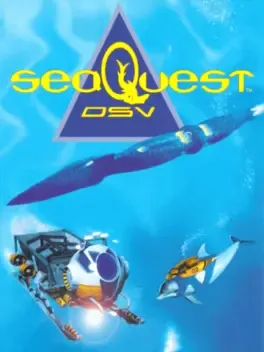
When a mission begins, the scale shifts. While the DSV 4600 is your primary base of operations, it is often too large to navigate tight caverns or delicate wreckage. To solve this, players must deploy smaller, specialized vehicles. These include the agile Stinger for combat and exploration, the HRPU (Hyper-Remote Probe Unit) for delicate technical work, and even Darwin, the crew's intelligent dolphin equipped with a translation device. Darwin is often used for reconnaissance or retrieving items in spaces too small for machines. The variety of equipment and the need to switch between units in real-time adds a layer of depth rarely seen in console games of that period.
This game was released on several platforms, including the Sega Mega Drive/Genesis and the Super Nintendo Entertainment System.
It is important to note that while a version of seaQuest DSV was also released for the Game Boy, that handheld iteration is a completely different game with unique mechanics and level designs compared to the 16-bit console versions.
Legacy
seaQuest DSV is remembered as a bold, if somewhat flawed, experiment in the genre of licensed gaming. At a time when most TV-to-game adaptations were generic platformers, developer Sculptured Software tried to capture the actual "feel" of being a submarine commander. While the difficulty was often criticized—especially the steep learning curve of controlling the various sub-units—the game was praised for its impressive graphics and atmospheric sound design. It remains a fascinating relic of the 90s, representing a bridge between the arcade-style action of the 80s and the more complex PC-style simulations that were beginning to gain traction on home consoles.
Fun Facts
- Darwin the dolphin is a fully playable character in the game, reflecting his popularity as the breakout star of the television series.
- The SNES and Genesis versions, while narratively identical, feature distinct differences in their color palettes and music synthesis, with many fans debating which version captures the "underwater" atmosphere better.
- The game features a shop system where you can purchase equipment, a mechanic that was relatively advanced for a licensed action-strategy title in 1994.
- The game's release was timed to capitalize on the show's second season, though it remains most evocative of the more grounded, scientific tone of the first season.