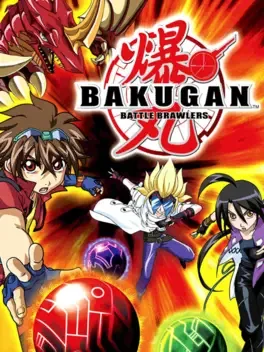
Bakugan Battle Brawlers
Introduction
Step into the arena where strategy meets action in Bakugan Battle Brawlers. This title holds a significant place in gaming history as the very first videogame adaptation of the massive Bakugan franchise. During a time when the anime and the physical marble-based toy line were a global phenomenon, this game provided the definitive digital experience for fans. It successfully translated the tactile excitement of rolling magnetic spheres onto cards into a polished, competitive video game format. Whether you were a seasoned veteran of the tabletop game or a newcomer drawn in by the animated series, this game offered an accessible yet deep entry point into the world of Vestroia, providing a unique blend of turn-based strategy and interactive mini-games.
Story & Setting
The game's narrative allows players to create their own unique avatar, placing them directly into the center of the Bakugan universe. Unlike many licensed games that simply follow the show's plot, Bakugan Battle Brawlers treats the player as a new hero. After arriving in town, your character quickly befriends Dan Kuso and the rest of the Battle Brawlers. The setting spans various vibrant locations, ranging from local neighborhood parks to high-tech battle arenas. As you rise through the ranks of the competitive circuit, a deeper mystery unfolds involving a unique Bakugan named Leonidas. This Bakugan, born in the Doom Dimension, shares a special bond with the player and becomes central to the conflict against a mysterious rival named Marduk. The journey is a balance between personal growth, tournament victories, and saving both the human world and the Bakugan dimension from impending doom.
Gameplay
The core mechanics are a masterclass in adapting physical play to a digital medium. The gameplay is divided into strategic preparation and action-oriented battles. Players start by choosing their Bakugan and a deck of cards. During a match, the goal is to roll your Bakugan onto Gate Cards. The physics of the roll are manual, requiring players to aim and adjust the speed to ensure their sphere lands perfectly. Once a battle is triggered, the game shifts from a strategy board game to a series of high-energy mini-games. Depending on the card and the situation, players might engage in a power-mashing contest, a timing-based rhythm game, or a shooting challenge to increase their G-Power. The tactical depth is expanded by elemental attributes such as Pyrus, Aquos, Subterra, Haos, Darkus, and Ventus. Each attribute has its own strengths, and choosing the right Bakugan for your personal deck is a key part of the experience. Between matches, players can visit the shop to upgrade their Bakugan or buy more powerful cards, allowing for significant customization of their playstyle.
Bakugan Battle Brawlers was released on several major platforms, allowing it to reach a wide audience of gamers across different console generations and types.
Legacy
The legacy of Bakugan Battle Brawlers is defined by its ability to capture lightning in a bottle. At the height of the franchise's popularity, it provided a high-quality alternative to the physical game that was both faithful and innovative. It is fondly remembered for its unique Bakugan designs and for featuring the original voice cast from the anime, which added a level of authenticity often missing from licensed titles. Its success paved the way for several sequels, including Bakugan: Defenders of the Core. For many who grew up in the late 2000s, this game represents the peak of the monster-battler genre on home consoles, proving that a toy-to-game adaptation could be deep, engaging, and mechanically sound.
Fun Facts
One of the most interesting aspects of the game is the inclusion of Leonidas, a Bakugan that never appeared in the original anime series, making him a true exclusive for gamers. Additionally, the game features a comprehensive Bakupedia that allows fans to track their collection and learn lore about every creature they encounter. Fans might also be surprised to learn that while the game focuses on the first season of the anime, its mechanics laid the groundwork for many systems seen in later iterations of the physical game. Another fun fact is that the game features a fully voiced protagonist, allowing for a more immersive storytelling experience compared to the silent protagonists common in RPGs of the era.