Introduction
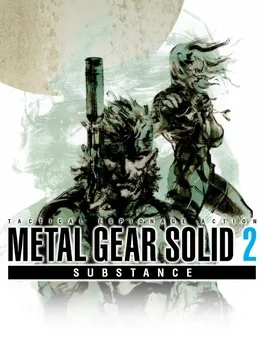
When Hideo Kojima released the original sequel to his stealth-action masterpiece, it took the world by storm with its technical prowess and subversive narrative. However, it was the expanded release, known as Metal Gear Solid 2: Substance, that truly perfected the experience. This revamped edition, often referred to by the community as MGS2: Substance, provided the definitive version of the tactical espionage action that defined an entire console generation. Whether you know it as METAL GEAR SOLID 2 SUBSTANCE or by its regional title 潛龍諜影2 真實之影, this package remains one of the most content-rich offerings in the history of the franchise, blending heavy philosophical themes with an incredible amount of bonus gameplay content.
Story & Setting
The narrative of MGS2 Substance is divided into two primary chapters: the Tanker and the Plant. It begins with the legendary Solid Snake infiltrating a U.S. Marine tanker to photograph a new prototype of Metal Gear Ray, which has been stolen by a group of rogue Russian soldiers. Following a shocking betrayal, the story jumps forward two years to the "Big Shell," an offshore decontamination facility. Here, players primarily take control of Raiden, a rookie operative tasked with rescuing the U.S. President from a terrorist group calling themselves the "Sons of Liberty." The setting is a sterile, labyrinthine industrial complex that serves as the backdrop for a story involving artificial intelligence, digital censorship, and the manipulation of information—themes that have only become more relevant in the decades since its release.
Gameplay
At its core, Metal Gear Solid 2: Substance is a masterclass in stealth mechanics. Players must navigate environments by avoiding guards, using a wide array of gadgets, and utilizing the environment to their advantage. What separates the Substance edition from the original release is the massive influx of additional content. It features over 200 VR missions that challenge players to master specific weapons, stealth maneuvers, and even first-person shooting modes.
Beyond the VR missions, the game includes "Snake Tales," which are five non-canonical story episodes that allow players to play through the Big Shell incident as Solid Snake instead of Raiden. The gameplay variety is further extended by "Alternative Missions," which involve everything from bomb disposal and target photography to all-out destruction. There is even a "Variety Mode" that features eccentric character models of different shapes and sizes, adding a layer of Kojima’s signature humor to the high-stakes espionage.
This game was released on several platforms, including the Xbox and the PlayStation 2, ensuring that fans of both major consoles at the time could experience the expanded content.
Legacy
The impact of MGS2: Substance cannot be overstated. It was one of the first major examples of a "Director’s Cut" in gaming that significantly expanded upon the base game’s value. While the original release was criticized by some for its lack of playable content featuring Solid Snake, the "Snake Tales" in Substance were a direct response to that feedback. Historically, the game is remembered for its daring meta-commentary on sequels and player expectations. In various markets, particularly in Asia where it was known as 潛龍諜影2 真實之影, it solidified the series' reputation for high-quality production and complex storytelling. It set the standard for the "expanded edition" model that Konami would follow for subsequent entries in the series.
Fun Facts
- The PlayStation 2 version of the game featured an exclusive skateboarding minigame built on the Evolution Skateboarding engine, featuring Solid Snake and Raiden on the Big Shell.
- The title MGS2 Substance refers to the game being the "substance" or the concrete expansion of the original's ideas.
- In the VR missions, players can encounter giant guards or even play as a "Ninja" version of Raiden.
- The game’s credits are famous for listing "Hideo Kojima" multiple times, emphasizing his role as writer, director, and producer.