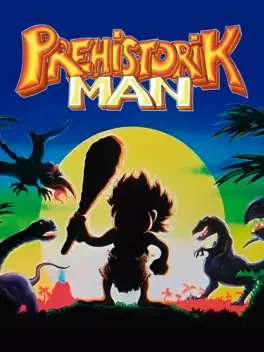
Prehistorik Man
Introduction
Released during the twilight years of the 16-bit era, Prehistorik Man stands as a testament to the creativity and polish that platforming games achieved in the mid-1990s. Developed by the French studio Titus Interactive, this title—sometimes referred to by its alternative name P-Man—is a spiritual successor to the earlier Prehistorik games found on home computers. While those early titles were charming in their own right, this console-focused entry pushed the boundaries of the Super Nintendo’s hardware, offering fluid animations, vibrant colors, and a unique jazz-inspired soundtrack that set it apart from its contemporaries. It remains a beloved cult classic for fans of the genre, blending traditional platforming tropes with a quirky prehistoric sense of humor.
Story & Setting
The narrative of the game begins in a peaceful, small prehistoric village where life is usually simple and quiet. However, tragedy strikes when a group of greedy, gluttonous dinosaurs raids the village’s winter food stores, leaving the inhabitants with nothing to eat. Facing the grim prospect of starvation during the cold months ahead, the Village Chief devises a desperate plan. He calls upon Sam, the village's bravest and most agile inhabitant, to embark on a perilous journey.
Sam’s mission is to save mankind by locating the legendary Dinosaur Graveyard. It is said that this mythical location is filled with valuable bones that can be used as currency. By navigating through unfamed and dangerous lands, Sam must collect enough of these bones to buy the food supplies necessary for the village’s survival. The quest takes Sam through a variety of lush but hostile environments, ranging from dense jungles and freezing glaciers to burning volcanoes and dark, haunted caves.
Gameplay
At its core, the game is a side-scrolling platformer that emphasizes exploration and resource management. Sam is equipped with a variety of tools to handle the local wildlife. His primary weapon is a stone club, but he can also utilize a unique "shout" mechanic. By charging up a meter, Sam can unleash a powerful scream that damages or defeats all enemies currently visible on the screen.
What sets this title apart is its economy system. Throughout each level, players collect bones, which serve as the game's currency. At various points, Sam can visit shops run by other villagers to spend these bones on health refills, extra lives, or even passwords to save progress. The level design is quite vertical and encourages backtracking to find hidden areas. Sam is also quite the athlete; he can operate unique prehistoric vehicles, including a stone hang-glider and a pogo stick, which add variety to the traversal mechanics. The game features a health system represented by hearts, and players must carefully manage their "food" meter to ensure Sam stays energized throughout his trek to the graveyard.
This game was released on several platforms, providing fans of different generations the chance to experience Sam’s adventure on both handheld and home consoles.
Legacy
Though it may not have reached the same level of global fame as Super Mario or Sonic the Hedgehog, the legacy of the game is defined by its exceptional production values. Critics at the time praised the Super Nintendo version for its "cartoon-like" quality, noting that the sprite work was among the best on the system. It is often cited as one of Titus Interactive’s finest hours, proving that they could produce a high-quality, original console experience.
The game's re-release on the Game Boy Advance and later on digital services like the Nintendo Switch Online service has allowed a new generation of players to discover its charm. It remains a favorite for retro collectors who appreciate its tight controls and the sheer variety of its gameplay loops. The character of Sam remains an iconic figure of the 90s platforming boom, representing a time when mascot platformers were the pinnacle of gaming.
Fun Facts
- The game features a distinctive soundtrack composed by Bjørn Lynne, which heavily utilizes jazz and swing influences, a rarity for a game set in the Stone Age.
- Depending on the region and platform, you might find the game titled simply as P-Man.
- If you manage to beat the game on the highest difficulty, you are rewarded with a special ending that hints at Sam’s future adventures.
- Titus Interactive’s mascot, the Titus Fox, makes a cheeky cameo appearance in several levels if you know where to look.
- Unlike many platformers of the time that relied on limited continues, this game used a robust password system to help players manage its challenging later stages.