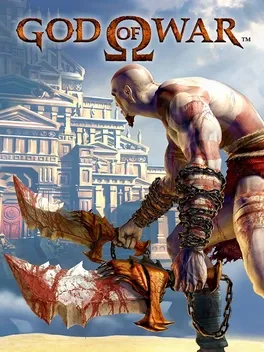
God of War
Introduction
In 2005, the landscape of action gaming changed forever with the release of God of War. Developed by the visionary team at Santa Monica Studio and published by Sony Computer Entertainment, this title redefined what players expected from cinematic combat and adult-oriented storytelling. Known by fans simply as GOW, it introduced the world to one of gaming's most iconic and complex anti-heroes: Kratos. This brutal epic blended high-octane violence with the grandeur of Greek mythology, setting a new gold standard for the hack-and-slash genre and establishing a franchise that would dominate the industry for decades.
Story & Setting
Set in the heart of ancient Greece, the narrative follows Kratos, a formidable Spartan warrior who once served as a commander in the Spartan army before pledging his soul to the Olympian gods. The story of GOW 1 is one of profound tragedy and relentless vengeance. Kratos was deceitfully manipulated by his former mentor, Ares, the God of War, into murdering his own wife and daughter in a blind rage. Haunted by the memories of his past and literally wearing the ashes of his family on his skin, Kratos seeks a way to kill the god who betrayed him. At the behest of the goddess Athena, Kratos is tasked with the impossible: slaying Ares. As Ares lays waste to the city of Athens, Kratos embarks on a perilous journey to the Desert of Lost Souls to locate Pandora's Box, the only artifact powerful enough to grant a mortal the strength to destroy a god.
Gameplay
The gameplay of God of War is legendary for its fluid combat and sheer brutality. Kratos primarily wields the Blades of Chaos—two curved blades attached to long chains seared into his forearms—allowing for wide-sweeping, devastating attacks. Players engage in a visceral hack-and-slash experience, chaining together intricate combos while managing magical abilities bestowed by various Olympian gods. Beyond the combat, the game features complex environmental puzzles and platforming sequences that require both wit and timing. A defining feature introduced here was the cinematic "Quick Time Event" (QTE), used for spectacular executions of massive mythological beasts like the Hydra and Minotaurs, making every boss battle feel like an epic cinematic climax.
This iconic title was originally designed for the hardware of its era, marking the beginning of a legendary series through its specialized technical achievements.
Legacy
God of War is often cited as one of the greatest video games of all time. It wasn't just a commercial hit; it was a cultural phenomenon that proved Sony could produce high-caliber, character-driven action titles. The game won numerous "Game of the Year" awards and transformed Santa Monica Studio into a powerhouse developer. It pioneered a style of cinematic action that emphasized scale and spectacle, which many other developers would attempt to replicate for years. Kratos himself became an enduring mascot for the PlayStation brand, representing a darker, more mature direction for narrative-heavy action games.
Fun Facts
Did you know that the word "Kratos" is actually the Greek word for "Strength"? Interestingly, while there is a mythological figure named Kratos, the developers have stated that the character in the game was not based on him but was an original creation. Another fascinating detail is Kratos' iconic red tattoo; in early development designs, the tattoo was actually blue. The color was changed to red late in the process to avoid visual similarities to the Barbarian class in Diablo II. Finally, the massive scale of the game was so ambitious that the team had to develop a custom engine to handle the seamless transitions between gameplay and cutscenes.