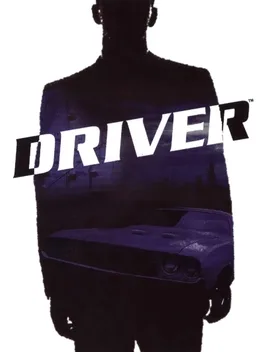
Driver
Introduction
Before the sandbox explosion of the early 2000s, one title redefined what it meant to be behind the wheel in a video game. Released in 1999, Driver—also known by its iconic alternative title Driver: You Are the Wheelman—brought a level of cinematic flair and technical prowess to the console generation that few thought possible. It wasn't just a simple racing game; it was a gritty, high-octane tribute to the legendary car chase movies of the 1970s. By focusing on the thrill of the chase rather than just crossing a finish line, it carved out a unique identity that resonated with millions of players worldwide, setting a new bar for vehicular action.
Story & Setting
The narrative puts players in the shoes of John Tanner, an ex-race car driver turned undercover NYPD officer. Tanner’s mission is deep and dangerous: he must infiltrate a sprawling criminal syndicate by proving his worth as the ultimate wheelman. To do this, he has to take advantage of his own excellent driving skills to earn the trust of the mob and move up the ranks. The journey spans four iconic American cities: Miami, San Francisco, Los Angeles, and New York. Each city was meticulously designed to capture its real-world counterpart's atmosphere, from the sun-drenched, neon-soaked streets of Florida to the iconic, suspension-shattering hills of the West Coast. The unfolding drama is told through atmospheric cutscenes that maintain the game's hard-boiled, cinematic tone throughout the investigation.
Gameplay
The core of Driver is its sophisticated physics engine, which was revolutionary for its time. Unlike the arcade racers common in the late 90s, cars in Driver felt heavy and susceptible to momentum. Suspensions would lean heavily into turns, and hubcaps would fly off during high-speed collisions, making every corner a calculated risk. The gameplay loop consists of various missions that test the player's versatility and nerve. These tasks range from delivering a vehicle to a client without a single scratch, to acting as the getaway driver in a chaotic bank robbery, or even aggressively eliminating competitors in high-speed pursuits.
One of the most innovative features was the Director Mode, which allowed players to view their exploits from various cinematic camera angles, effectively letting them create their own action movie highlights. Beyond the main campaign, the game offered several mini-games, including the Survival mode, where the player is chased by an endless swarm of hyper-aggressive police cars—a mode that has become legendary for its sheer difficulty and intensity.
Driver was a landmark title for its generation, pushing hardware to its absolute limits to render large, traversable cityscapes. This game was released on several platforms, including the original PlayStation.
Legacy
Driver is often cited as a crucial precursor to the 3D open-world genre. While the Grand Theft Auto series would eventually take the concept to new heights, Driver laid the fundamental groundwork for realistic city exploration and mission-based vehicular gameplay. It spawned a long-running franchise with several sequels and spin-offs, cementing John Tanner's place in gaming history. Its influence is still visible today in any modern title that prioritizes physics-based driving and cinematic storytelling over pure racing mechanics. It proved that the car itself could be the protagonist of a compelling action-adventure story.
Fun Facts
- The Garage of Doom: The game’s opening tutorial, set in a dark parking garage, is notoriously one of the most difficult first missions in gaming history. Players had to perform a list of complex stunts like a slalom and reverse 180 within a strict 60-second time limit. Many players never actually saw the rest of the game because they couldn't get out of that garage!
- Cinematic Roots: The game was heavily inspired by the 1978 film The Driver, directed by Walter Hill. It shares the movie's minimalist aesthetic and focuses on a protagonist who is a specialist in his criminal field.
- Hubcap Physics: In a nod to 70s action movies, you can often see more than four hubcaps fly off a single car during a long chase, a deliberate easter egg referencing the famous continuity errors in the movie Bullitt.