FIFA Soccer 07
Introduction
FIFA Soccer 07, also widely recognized by fans as FIFA Football 07 or FIFA 07 Soccer, stands as a landmark title in the history of Electronic Arts' sports division. Released in late 2006, this edition arrived at a critical juncture in gaming history, serving as both a grand finale for the sixth generation of consoles and a technical showcase for the emerging next-gen hardware. Developed by EA Canada and published by Electronic Arts, the game sought to bridge the gap between realism and accessible arcade action. By refining the series' mechanics and introducing groundbreaking physics engines, it successfully captured the global excitement of the sport during an era when football gaming was reaching its peak popularity.
Story & Setting
Unlike traditional narrative-driven games, the "story" of FIFA Soccer 07 is one of personal ambition and managerial strategy. The game is set against the backdrop of the 2006-2007 world football season, featuring a massive roster of over 510 teams across 27 leagues and 20 nations. The heart of the experience is the Manager Mode, where players are tasked with taking the helm of their favorite club. Here, the narrative is shaped by your decisions: managing team finances, scouting for the next global superstar, and navigating the high-pressure environment of league tables and domestic cups. Whether you are leading a giant like FC Barcelona or a smaller club fighting for promotion, the game provides a deep sense of place through authentic stadiums and a television-style presentation that makes every match feel like a high-stakes event.
Gameplay
Gameplay in FIFA Soccer 07 saw a significant leap forward, particularly with the introduction of a new physics engine. For the Xbox 360 version, the developers overhauled how the ball interacted with the pitch and players, treating the ball as a separate entity rather than one "glued" to the player's feet. This allowed for more organic movement, realistic deflections, and nuanced shooting mechanics. On other platforms, the game refined the "Total Ball Control" system, giving players better agility in one-on-one situations. Another major addition was the Interactive Leagues, a pioneering online mode that synchronized with real-life fixtures of the Premier League and other top divisions, allowing players to impact their club's online standing in real-time. The AI was also improved to be more tactically aware, making defensive positioning and build-up play more rewarding for experienced gamers.
This title was remarkably prolific, appearing on a wide variety of systems ranging from sixth-generation home consoles to modern seventh-generation hardware and various handhelds.
Legacy
FIFA Soccer 07 is remembered as one of the most important transitional games in the franchise. It was the final entry released for the Nintendo GameCube, the original Xbox, and the Game Boy Advance, ending a long-running era of support for those platforms. Simultaneously, its debut on the Xbox 360 laid the groundwork for the modern era of the series, showcasing the potential of high-definition graphics and advanced physics. The game was a commercial juggernaut and received positive reviews for its improved responsiveness and atmospheric presentation. It remains a nostalgic favorite for many fans due to its balance of classic features and the introduction of concepts that would become staples of the series for years to come.
Fun Facts
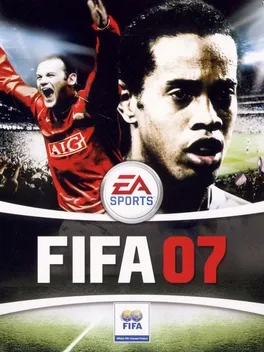
One of the most distinctive features of FIFA 07 was its localized cover art. While Ronaldinho was the primary global star, he was joined by regional heroes: Landon Donovan and Francisco Fonseca in North America, Wayne Rooney in the UK, and Kaká in Italy, among others. In a rare move for sports games, FIFA 07 also became a real-world sponsor for the English club Accrington Stanley during the 2007–08 season, with the game's logo appearing on the back of the team's kits. Furthermore, the Xbox 360 version’s physics engine was so advanced at the time that it remained exclusive to that specific console for an entire year before being integrated into other platforms.