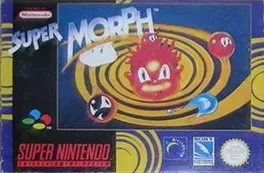
Found 1 item(s) for sale
-
Send a Message to
Released during the peak of the 16-bit era in 1993, Super Morph stands as a testament to the creative ingenuity of European game development. At a time when the Super Nintendo Entertainment System (SNES) library was dominated by fast-paced platformers and sweeping Japanese RPGs, Super Morph offered a refreshing, cerebral challenge. Developed by Millennium Interactive, this title invited players to engage with physics-based puzzles long before the genre became a staple of the independent gaming scene. It is a hidden gem that rewards patience, logic, and a keen understanding of environmental interaction, making it a cult favorite among retro enthusiasts who appreciate a more methodical pace of play.
Unlike many of its contemporaries, Super Morph does not lean heavily on a traditional narrative or cinematic cutscenes. Instead, it places the player in an abstract, industrial, and sometimes laboratory-like world. You take control of a mysterious, sentient entity capable of changing its molecular structure at will. The setting serves as a series of complex gauntlets, where the architecture itself is the primary antagonist. The goal is simple yet daunting: navigate through a variety of increasingly difficult rooms and chambers to reach the exit. Each zone feels like a sterile, high-tech obstacle course where the laws of physics are your only tools for survival, and your environment is a puzzle waiting to be decoded.
The core of Super Morph lies in its namesake mechanic: the ability to transform between four distinct states of matter. Each form has specific physical properties that are essential for overcoming obstacles.
Players must find transformation pads scattered throughout the levels to switch between these states. Success depends on recognizing which form is needed for a specific environmental hazard. For example, you might need to be a cloud to reach a high platform, then find a cooling pad to turn into a rubber ball to bounce across a gap, and finally become a cannonball to break a barrier blocking the exit.
This game was primarily released for players in the European market on the Super Nintendo Entertainment System.
While Super Morph never reached the mainstream heights of icons like Super Mario or Sonic the Hedgehog, its legacy lives on through the reputation of its developer, Millennium Interactive. The studio would eventually evolve into Sony Computer Entertainment Studio Cambridge, the creative force behind the legendary MediEvil series. Super Morph is often cited by retro gaming historians as a prime example of the "Amiga style" of game design—prioritizing clever mechanics and unique aesthetics over traditional arcade tropes—being successfully ported and adapted for console audiences. It remains a fascinating footnote in the history of SNES puzzle games, praised for its difficulty and its early adoption of multi-state character mechanics.