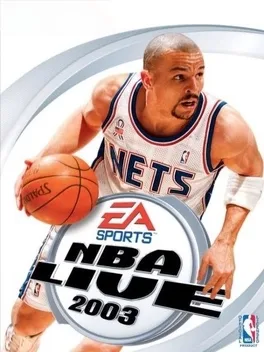
NBA Live 2003
Introduction
The early 2000s marked a golden era for sports simulations, and in 2002, EA Sports delivered one of its most influential entries with NBA Live 2003. This installment wasn't just another incremental update; it represented a significant shift in how basketball was played and felt on home consoles. By prioritizing fluid animations and introducing more responsive control schemes, NBA Live 2003 aimed to capture the fast-paced, high-flying energy of professional basketball during an era of legendary superstars. For many fans, this remains a nostalgic peak for the franchise, balancing the realism of a simulation with the addictive excitement of an arcade-style experience.
Story & Setting
While traditional narrative story modes were not yet a staple of sports games in 2002, NBA Live 2003 is deeply rooted in the setting of the 2002-2003 NBA Season. This was a fascinating time in basketball history, featuring the peak of the Los Angeles Lakers' dominance with Shaquille O'Neal and Kobe Bryant, alongside the rise of the New Jersey Nets led by Jason Kidd. The game provides a perfect time capsule of this era, featuring accurate rosters, authentic team jerseys, and meticulously recreated arenas that reflect the atmosphere of the early millennium's NBA culture. Whether taking a team through a grueling 82-game season or managing a franchise in the front office, the game immerses players in the competitive landscape of the early 2000s.
Gameplay
The gameplay of NBA Live 2003 saw a massive overhaul, most notably with the introduction of what would become the "Freestyle Control" system. This allowed players to use the right analog stick to perform specific dribble moves, crossovers, and spins, giving a level of manual control over ball-handling that was previously unseen. Visually, the game leaped forward with improved graphics, featuring highly detailed player faces and a robust player design engine that allowed for more distinct physical characteristics.
Technical performance was a high priority, with the game running at a smooth 60 frames per second, ensuring that the action never stuttered during intense fast breaks. To further enhance the realism, EA Sports utilized extensive motion capture sessions to implement more than 30 new rebound animations, providing a visceral feel to the battle under the boards. The game also introduced varied passing styles, specialized shot-blocking animations, and refined defensive AI. For those who preferred team management, the complete fantasy draft remained a staple, and the multiplayer support allowed for fierce competition between friends both locally and online (depending on the platform).
NBA Live 2003 was released across the major gaming consoles of its generation, ensuring that every basketball fan had a way to hit the court.
Legacy
NBA Live 2003 is often remembered as the point where the series truly embraced the "street" influence on the professional game, resulting in a faster, more stylized flow. While it faced stiff competition from the burgeoning NBA 2K series, NBA Live 2003 held its ground with its superior presentation and the revolutionary Freestyle Control system, which would become a standard feature in basketball games for years to come. It was a commercial success that solidified EA Sports' dominance in the market during the sixth generation of consoles. Many long-time fans still cite the game's soundtrack and fast-paced mechanics as the benchmark for fun in a basketball simulation.
Fun Facts
- Jason Kidd, the legendary point guard for the New Jersey Nets, served as the cover athlete for this edition.
- NBA Live 2003 was the first video game soundtrack in history to be certified Platinum by the RIAA, selling over a million copies as a standalone music release.
- The game's focus on "Freestyle" control was a response to the growing popularity of streetball culture and the "And1 Mixtape Tour."
- It featured a hidden team of EA Sports developers that players could unlock and play as in various game modes.