NBA Live 99
Introduction
Story & Setting
Gameplay
Platforms
Legacy
Fun Facts
Introduction
NBA Live 99 arrived during a tumultuous period for professional basketball, yet it managed to carve out a reputation as one of the most innovative entries in EA Sports' long-running franchise. Released in late 1998, it was the successor to the highly acclaimed NBA Live 98 and had the difficult task of following up on a game that many fans considered a high-water mark for the series. Despite the challenges of the era, NBA Live 99 pushed the boundaries of what a basketball simulation could offer, introducing structural changes that would eventually become standard across the entire genre. As the fifth installment in the NBA Live series, it showcased the growing power of the era's 32-bit and 64-bit consoles, providing smoother animations and deeper strategic options than ever before.
Story & Setting
In the world of sports gaming, the story is often found in the real-world context of the league it simulates. NBA Live 99 is uniquely defined by the 1998–99 NBA lockout, a period of labor dispute that nearly cancelled the entire season. Because the lockout prevented player movements and rookie signings during the summer of 1998, EA Sports was forced to ship the game with the previous year's rosters from the 1997-98 season. This created a strange time-capsule effect where players remained on their old teams, and high-profile rookies like Vince Carter and Paul Pierce were notably absent from the initial release. The game captures the atmosphere of the late 90s NBA, an era transitioning away from the dominance of the Chicago Bulls following Michael Jordan's second retirement, leaving the league's crown up for grabs.
Gameplay
The gameplay of NBA Live 99 was a significant leap forward in terms of depth and simulation quality. One of the most touted additions was the inclusion of a dedicated Practice Mode, allowing players to refine their shooting and movement without the pressure of a ticking clock or a defending opponent. However, the most revolutionary mechanic was the introduction of multi-season play. For the first time in the series, players could participate in consecutive seasons, experiencing the evolution of their roster over time. This included a rudimentary player development system where athletes' stats would fluctuate between seasons based on age and performance. While it lacked features like free agency or generated rookies, it served as the essential forerunner to Franchise Mode. On the court, the game featured "DirectSeed" passing and more fluid post-up moves, giving players greater control over the game's tempo.
NBA Live 99 was primarily developed for the dominant home consoles of the late 1990s, ensuring that basketball fans could enjoy the action regardless of their hardware preference.
Legacy
The legacy of NBA Live 99 is one of transition and foundation-building. It is remembered as a pioneer for team management, a cornerstone of modern sports games. By proving that players had an appetite for long-term team management and multi-year progression, EA Sports laid the groundwork for the deep simulation modes seen in the 2000s. While it was eventually overshadowed by the technological leaps of the PlayStation 2 era, NBA Live 99 remains a nostalgic favorite for those who remember the chunky polygons and the high-energy soundtrack of the late 90s. It solidified EA Sports' position at the top of the basketball market before competition from the 2K series significantly intensified, representing a key moment in the series' early evolution.
Fun Facts
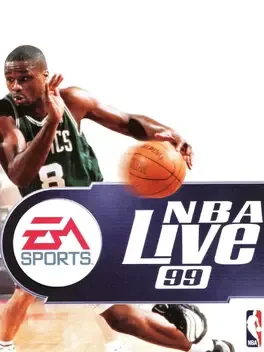
NBA Live 99 features Antoine Walker, the Boston Celtics star, as its cover athlete. Due to the lockout, the game was one of the few sports titles ever released where the current season rosters were actually a year out of date at launch. Another interesting detail is the soundtrack, which featured high-energy tracks that helped define the sports presentation style of the late 90s. Despite the lockout, the game's PC version received patches later on to address roster changes, but console players generally had to stick with the 1997-98 lineups. Furthermore, while the game did not have a formal Street mode yet, its arcade-style speed and physics often made it feel like a bridge between pure simulation and the streetball culture that was becoming popular.