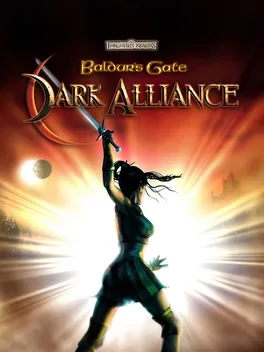
Baldur's Gate: Dark Alliance
Introduction
When Baldur's Gate: Dark Alliance first debuted in the early 2000s, it sent shockwaves through the gaming community. While the Baldur’s Gate name was already synonymous with deep, complex computer role-playing games (CRPGs), this title took the franchise in a bold new direction. It traded the tactical, pause-and-play combat of its predecessors for a visceral, real-time action-adventure experience. Developed by Snowblind Studios, it became an immediate benchmark for technology and gameplay, proving that the Dungeons & Dragons license could flourish in a high-octane, hack-and-slash format on home consoles.
Story & Setting
The game is set in the legendary city of Baldur’s Gate within the Forgotten Realms. The narrative begins with a classic D&D hook: three adventurers arrive at the city gates only to be ambushed and robbed by a local gang of thieves. These protagonists—Vahn the Arcane Archer, Adrianna the Elven Sorceress, and Kromlech the Dwarven Fighter—soon find themselves embroiled in a plot much larger than a simple mugging.
Starting at the Elfsong Tavern, players must navigate the city's treacherous sewers and eventually travel far beyond the city walls to the Sunset Mountains and the Marsh of Chelimber. The epic tale of intrigue involves ancient betrayals and fierce alliances as the heroes attempt to stop the resurrection of an ancient evil known as Eldrith the Betrayer. The environments are highly detailed, capturing the grime of urban dungeons and the majesty of frozen peaks with equal fidelity.
Gameplay
Baldur’s Gate: Dark Alliance redefined the console ARPG. At its core, the gameplay revolves around real-time combat and character progression based on a streamlined version of the D&D 3rd Edition ruleset. Players gain experience points to level up, allowing them to customize their characters with new abilities and explosive spell effects.
The combat is fluid and satisfying, emphasizing positioning and timing. Whether you are swinging a massive battleaxe as Kromlech or raining down magical fire as Adrianna, the game feels responsive. One of its standout features was the loot system; players are constantly finding new armor, weapons, and magical items to improve their combat efficacy. Furthermore, the game’s local cooperative mode became legendary, allowing two friends to tackle the campaign together, sharing the gold and the glory while navigating the increasingly difficult swarms of creatures.
This game was released on several platforms, spanning from the sixth generation of consoles to modern systems via a high-definition re-release.
Legacy
The legacy of Baldur’s Gate: Dark Alliance is one of technical innovation. For its time, it featured some of the most advanced water physics and lighting effects ever seen on a console. It paved the way for a whole sub-genre of "console-style" action-RPGs, leading directly to sequels and spiritual successors like the Champions of Norrath series. Even decades later, its influence is felt in modern isometric action titles. The 2021 re-release on modern platforms proved that the core gameplay loop remains as addictive today as it was twenty years ago, introducing a new generation of players to the dark corners of the Sword Coast.
Fun Facts
- The game was built on the proprietary Snowblind Engine, which was specifically designed to maximize the hardware capabilities of the PlayStation 2.
- While it uses Dungeons & Dragons rules, it was the first game to implement the then-new 3rd Edition rules in a real-time action format.
- The realistic water effects, which rippled and reacted to character movement, were considered a graphical "killer feature" at the time of release.
- If players complete the game on the hardest difficulty setting, they can unlock the famous drow ranger Drizzt Do'Urden as a playable character.