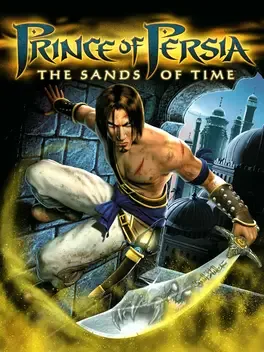
Prince of Persia: The Sands of Time
Table of Contents
Introduction
When Prince of Persia: The Sands of Time arrived in 2003, it redefined what an action-adventure game could be. Developed by Ubisoft Montreal and often referred to by fans as PoP: SoT or simply PoPSoT, this title was a bold reboot of the classic 2D series created by Jordan Mechner. Mechner himself played a pivotal role as a consultant and writer, ensuring that the essence of the original game was preserved while leaping into the third dimension. The game introduced a cinematic flair and fluid movement system that would influence the industry for decades. At its core, the game captured a sense of magical realism that resonated with players across the globe, setting a high bar for platformers and cinematic storytelling.
Story & Setting
Set in a mythical version of ancient Persia, the story follows a young Prince who, seeking to impress his father, steals the Dagger of Time from a Maharaja’s palace. Deceived by a treacherous Vizier, the Prince releases the Sands of Time, which transform the palace’s inhabitants into horrific sand monsters. Known in various regions as Prince of Persia: Les Sables du Temps or Prince of Persia: Las Arenas del Tiempo, the narrative focuses on the Prince’s journey to undo this catastrophe. Alongside the Maharaja's daughter, Farah, the Prince must navigate a crumbling palace and restore the sands to their vessel. The relationship between the Prince and Farah evolves naturally through gameplay and dialogue, providing a surprisingly grounded emotional anchor for such a fantastical plot.
Gameplay
The core of the experience lies in its revolutionary gameplay, which combines intricate platforming with fluid combat. Players utilize the Dagger of Time to manipulate the flow of time itself. This mechanic allows for "Rewind," which lets players reverse mistakes, and "Slow," which grants a tactical advantage during hectic battles. Whether you know it as Prince of Persia: Piaski Czasu or Prince of Persia: Písky času, the game is celebrated for its revolutionary parkour movement system. The Prince can run along walls, swing from poles, and leap across massive chasms with a level of grace that was unprecedented at the time. The level design often functions as a large-scale puzzle, requiring players to observe their surroundings and utilize the environment to progress.
This game was released on several platforms, including the primary sixth-generation consoles and later high-definition remasters across different regions.
Legacy
The impact of the game on the industry cannot be overstated. From the Russian title Princ Persii: Peski Vremeni to the Italian Prince of Persia: Le Sabbie del Tempo, the game received universal acclaim for its art direction, storytelling, and mechanics. It spawned a successful trilogy including Warrior Within and The Two Thrones, and directly inspired the development of the early Assassin's Creed titles. Its blend of narrative-driven gameplay and technical innovation remains a gold standard for 3D platforming. Critics often cite it as one of the greatest games ever made, noting how it fixed the frustrations of early 3D camera systems and controls while maintaining a cohesive, artistic vision that felt like a playable fairy tale.
Fun Facts
Interestingly, the game’s Chinese title is Bosi Wangzi: Shi zhi Sha. Another fascinating detail is that the Prince's voice actor, Yuri Lowenthal, became iconic for the role, returning for several subsequent entries. Furthermore, the game includes the original 1989 Prince of Persia as an unlockable secret, bridging the gap between the classic 2D roots and the modern 3D era. The animation was so detailed for its time that the Prince has over 750 unique animations, contributing to the incredible smoothness of his movements. Legend has it that the time-rewind feature was inspired by the developers' frustration with difficult platforming segments in other games, leading to a "user-friendly" solution that became a genre-defining mechanic.