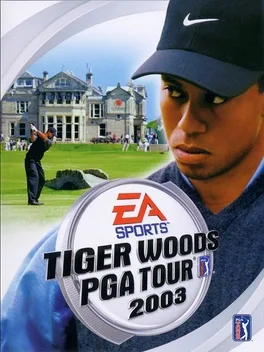
Tiger Woods PGA Tour 2003
Introduction
Story & Setting
Gameplay
Platforms
Legacy
Fun Facts
Introduction
In the early 2000s, Tiger Woods was more than just a golfer; he was a global cultural icon who redefined the sport of golf for a new generation. Capturing this era of dominance, EA Sports released Tiger Woods PGA Tour 2003, a title that many veterans of the genre still consider to be a high-water mark for sports simulations. Released during the height of Tiger-mania, this game successfully bridged the gap between a strict, technical simulation and a high-energy, accessible sports title. With its refined controls, impressive roster of professional and fantasy golfers, and deep career modes, it set a benchmark that would define the franchise's trajectory for years to come.
Story & Setting
While Tiger Woods PGA Tour 2003 does not feature a traditional narrative campaign, it effectively places players into the story of an aspiring professional golfer climbing the ranks of the PGA Tour. The setting encompasses the high-stakes world of professional golf, featuring some of the most iconic and meticulously recreated courses on the planet. From the windswept dunes of Pebble Beach to the legendary fairways of Torrey Pines, the game provides a digital tour of golfing excellence. The atmosphere is further enhanced by a presentation style that mimics a professional television broadcast, making every clutch putt feel like a headline-making event. Players are tasked with building a legacy in a competitive world populated by real-life legends and a cast of colorful, larger-than-life fantasy characters.
Gameplay
The gameplay of Tiger Woods PGA Tour 2003 was revolutionary for its time, primarily due to the introduction of the TrueSwing mechanic on console versions. Moving away from the traditional three-click power bar, players used the analog stick to simulate the rhythm of a real golf swing, providing a tactile and intuitive experience. The game is packed with diverse modes to keep players engaged. A standout feature is the Tiger Challenge, a ladder-style gauntlet where players face off against a series of golfers in one-on-one matches, ending in a final showdown with Tiger himself.
For those seeking structured challenges, the Scenario Mode offers 50 distinct scenarios. These drop players into specific, difficult situations—such as saving par from a deep bunker or sinking a massive putt under pressure—that require both skill and strategy. Additionally, the Tournament Mode allows for a full simulation of a PGA Tour season, complete with realistic leaderboards and season-long rankings. The balance between the fast-paced arcade elements and the rigorous simulation of the Tournament play ensured the game remained addictive for all types of players.
This game was released on several platforms, including the PlayStation 2, Xbox, and Nintendo GameCube.
Legacy
The legacy of Tiger Woods PGA Tour 2003 is one of innovation and significant commercial success. It was one of the first golf games to successfully integrate a sense of style and attitude into a sport often perceived as slow-paced. By incorporating a high-energy soundtrack and a faster pace of play, EA Sports expanded the demographic for golf games. Critics at the time praised its physics engine and the depth of its career mode, and it frequently appears on lists of the greatest sports games of its era. It proved that golf could be exciting and edgy, paving the way for the even more expansive customization and social features seen in later franchise entries.
Fun Facts
- The game features a surprisingly robust licensed soundtrack for a golf title, including tracks from popular early-2000s rock bands like Saliva and P.O.D.
- It was the first entry in the series to include real-time weather effects, which could theoretically sync with actual weather reports for certain courses.
- Many of the fictional fantasy golfers in the Tiger Challenge became fan favorites, appearing in several sequels due to their unique animations and playstyles.
- Even decades after its release, a dedicated community of fans still revisits this version for its specific balance of physics and speed, which some feel has never been perfectly replicated in modern sequels.