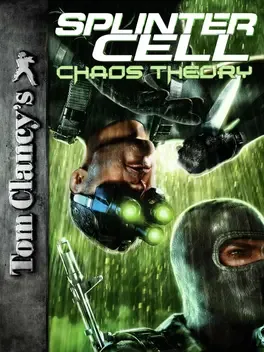
Tom Clancy's Splinter Cell: Chaos Theory
Introduction
When it comes to the absolute pinnacle of stealth-action gaming, few titles command as much respect as Tom Clancy's Splinter Cell: Chaos Theory. Released at a time when the genre was undergoing a massive evolution, this third installment—frequently referred to by fans simply as Splinter Cell 3—perfected the formula established by its predecessors. Players once again step into the tactical boots of Sam Fisher, the NSA's most elite black-ops agent and a senior member of the secretive Third Echelon. Chaos Theory did not just iterate on previous titles; it redefined what it meant to be a 'Splinter Cell.' With its moody atmosphere, cutting-edge graphics for the sixth generation, and a soundtrack that pulse-pounded through every tense mission, it remains a gold standard for immersive tactical gameplay. Whether you identify it as SPC:CT or as the definitive entry in the series, Fisher's third outing is a masterpiece of tension.
Story & Setting
The narrative of Tom Clancy's Splinter Cell: Chaos Theory is a masterclass in geopolitical thriller writing, rooted deeply in the 'techno-thriller' style. Set in the then-near-future of 2007, the world is embroiled in a terrifying new type of conflict: information warfare. Tensions reach a breaking point in the East Sea, where a Japanese 'Information Self-Defense Force' sparks outrage among its neighbors. As Sam Fisher, you must untangle a web of conspiracy involving high-tech data theft and international assassinations that threaten to spark a global war. This entry, often abbreviated as SPCT, takes players from the rainy docks of Panama to the neon-lit streets of Seoul and the high-tech environments of Hokkaido. The story explores the vulnerability of modern society to digital sabotage, making the stakes feel incredibly high and grounded in a plausible reality.
Gameplay
Gameplay in Chaos Theory represents the series' mechanical peak. The most significant additions were the refined stealth mechanics, including both a light meter and a sound meter, requiring players to manage their visibility and the noise they generated. Unlike previous entries where combat was often a failure state, Sam Fisher became much more lethal. Armed with a combat knife, players could perform silent takedowns or use radical suppression techniques such as the iconic inverted neck break, dropping from pipes to neutralize guards instantly. The prototype Land Warrior rifle returned with various attachments like sticky cameras. Furthermore, the game introduced a groundbreaking cooperative multiplayer mode. These cooperative infiltration missions were separate from the main story, proving that teamwork is the ultimate weapon as two agents worked together to bypass security systems that a single operative could never crack alone. This cooperative experience remains a legendary aspect of the SPCT legacy.
This game was released on several platforms, including the Xbox, PlayStation 2, and the Nintendo GameCube, ensuring that players across all major consoles could experience Fisher's journey. It also saw later adaptations under titles such as Splinter Cell 3D and Splinter Cell: Chaos Theory 3DS.
Legacy
The legacy of Splinter Cell: Chaos Theory is one of near-universal acclaim. At its release, it was lauded for its graphical fidelity, particularly its use of normal mapping and complex lighting effects that were years ahead of their time. It is frequently cited in 'Greatest Games of All Time' lists and is considered the high-water mark for the Splinter Cell series. The game’s influence can be seen in almost every stealth title that followed. Even the handheld version, Splinter Cell 3D, attempted to bring this massive experience to a portable format, showing the enduring demand for the title. For many, SPC:CT represents the moment the stealth genre reached maturity, balancing hardcore simulation with cinematic flair.
Fun Facts
Did you know that the acclaimed electronic artist Amon Tobin composed the soundtrack for Chaos Theory? His work is often cited as one of the best examples of adaptive music, where the score shifts dynamically based on the player's stealth status. Another interesting fact is that the game's development was split between Ubisoft Montreal and Ubisoft Milan, with the latter focusing heavily on the innovative co-op mode. In certain regions, the game was simply promoted as Splinter Cell 3. Whether you are playing the original version or the Splinter Cell: Chaos Theory 3DS port, the attention to detail, like Fisher’s ability to whistle to distract guards or the visceral feel of the knife mechanics, makes it an unforgettable experience in the Tom Clancy universe.