Resident Evil Outbreak
Introduction
Story & Setting
Gameplay
Platforms
Legacy
Fun Facts
Introduction
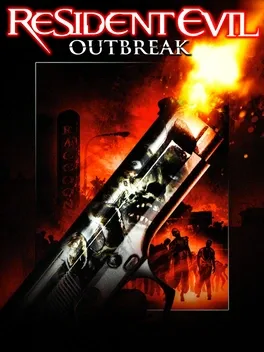
Long before cooperative online horror became an industry standard, Capcom released a groundbreaking title that challenged the conventions of its franchise: Resident Evil Outbreak. Known among the fanbase as REO or RE Outbreak, this game represented a significant departure from the solo adventures of previous series entries. Instead of focusing on super-powered protagonists or elite tactical units, the game turns its lens toward the ordinary citizens of Raccoon City as they struggle to survive a biohazard nightmare. This ambitious project was the first in the series to implement online multiplayer, allowing players to team up in real-time to navigate zombie-infested streets. For many, it remains a high-water mark for atmospheric storytelling and innovative mechanics that were truly ahead of their time.
Story & Setting
The narrative of the game, titled Biohazard: Outbreak in Japan, is set during the chaotic T-Virus leak in Raccoon City. It covers the timeline spanning from the initial outbreak to the city's eventual destruction. The game is presented through five distinct scenarios, each featuring a different location—from the initial chaos at J's Bar to the dangerous halls of the Umbrella Corporation's underground facilities. Players choose from a cast of eight survivors, including a police officer, a doctor, and a waitress. Each character brings a unique background and specialized skills that reflect their civilian lives. This ensemble approach provides a multi-faceted view of the tragedy, highlighting the desperation of individuals trying to escape a city quarantined by the government.
Gameplay
Resident Evil Outbreak retains the classic fixed-camera angles and survival-horror formula while integrating multi-character dynamics. The headline feature is the multiplayer mode, supporting up to four players over the PlayStation 2's network. In this mode, coordination is vital as resources like ammunition and healing items are extremely scarce and must be shared. For single-player fans, the game provides two AI-controlled allies to round out the team. A unique mechanic is the "Virus Gauge"; every character is infected from the start, and the gauge increases over time or when attacked. If it reaches 100%, the player dies. Furthermore, communication is limited to a preset command system, forcing players to rely on environmental cues and basic signals, which significantly heightens the tension and sense of isolation.
This survival-horror experience was developed specifically for the console hardware of its era, primarily focusing on the PlayStation 2 across various regions.
Legacy
The legacy of Resident Evil Outbreak is one of untapped potential and visionary design. At the time of release, the logistical hurdles of the PlayStation 2 network adapter meant many players never saw the game's full online potential. However, the title has grown in stature over the decades, now viewed as a visionary precursor to modern cooperative horror games. The depth of its mechanics—such as barricading doors, hiding in lockers, or helping injured teammates limp to safety—added a level of realism rare for 2003. The game was followed by Resident Evil Outbreak File #2, and today, dedicated fan communities have reverse-engineered servers to keep the online experience alive, proving the demand for this cooperative format remains strong.
Fun Facts
One interesting piece of trivia is that the game was originally conceived under the working title "Resident Evil Online." Additionally, while the Japanese and North American versions featured robust online play, the European release initially lacked this feature entirely due to network infrastructure delays in the PAL region. Another fun fact is that each character has a hidden "special item" unique to them: Alyssa has a lockpick for drawers, while David carries a toolbox to create improvised weaponry. Finally, the game’s main theme is widely considered one of the most atmospheric and recognizable tracks in the entire Resident Evil discography.