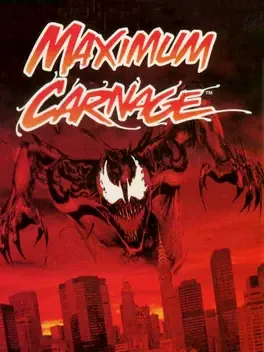
Spider-Man and Venom: Maximum Carnage
Introduction
In the early 1990s, comic book crossovers were at the height of their popularity, and few events were as chaotic or as visually striking as Marvel's "Maximum Carnage." To capitalize on this success, Software Creations and Acclaim Entertainment brought the experience to home consoles in 1994. Spider-Man and Venom: Maximum Carnage stands as a quintessential 16-bit beat 'em up, capturing the dark, gritty atmosphere of the source material. It remains a fan favorite not just for its challenging gameplay, but for its bold presentation—starting with the iconic red plastic cartridges that signaled to every gamer that this wasn't their average superhero title. As a licensed game, it pushed the boundaries of narrative integration, using actual comic book panels to drive the story forward.
Story & Setting
The game is set in the sprawling, dangerous streets of New York City, meticulously recreating the narrative arc of the 14-part comic book series. The story begins when the psychopathic serial killer Cletus Kasady, host to the Carnage symbiote, escapes from the Ravencroft Institute. Carnage quickly recruits a "family" of villains to help him unleash a wave of mindless violence across the city. This group includes the sonic-powered Shriek, the multi-armed Doppelganger, the supernatural Demogoblin, and the decaying Carrion.
Faced with a threat too large for a single hero, the narrative forces an uneasy alliance. Spider-Man, known for his strict moral code, must team up with his arch-enemy Venom, who is driven by a much more lethal brand of justice. Together, they navigate the rooftops and back alleys of Manhattan, trying to quell the riotous carnage while recruiting other Marvel heroes to their cause.
Gameplay
Spider-Man and Venom: Maximum Carnage is a traditional side-scrolling brawler where players can choose between the two protagonists. Spider-Man is faster and more agile, excelling at web-based maneuvers, while Venom is a powerhouse, utilizing brute force and symbiote tendrils to devastate enemies. The combat is visceral, requiring players to master combos, grabs, and aerial attacks to survive the onslaught of street thugs and supervillains.
One of the most unique mechanics is the "Hero Helper" system. Throughout the levels, players can collect icons that allow them to summon various allies from the Marvel Comics fictional universe. These guest stars include Captain America, Black Cat, Iron Fist, Cloak and Dagger, Deathlok, Morbius, and Firestar. Each hero provides a specific type of assistance, such as Captain America's shield throw clearing a line of enemies or Firestar providing a screen-clearing heat blast. This mechanic adds a layer of strategy to the brawling, as players must decide when to save their limited summons for difficult boss encounters.
This game was released on several platforms, including the Super NES and Sega Genesis/Mega Drive.
Legacy
The historical significance of Maximum Carnage lies in its faithfulness to the source material. At a time when many licensed games felt generic, this title felt like a love letter to Marvel fans. Its success led to a direct sequel called Venom/Spider-Man: Separation Anxiety, which expanded on the formula by introducing two-player simultaneous cooperative play. While the sequel added multiplayer, many fans still point to Maximum Carnage as having the superior atmosphere and narrative drive. The game is also remembered for its intense difficulty spikes, which became a hallmark of mid-90s beat 'em ups, challenging players to master every nuance of the combat system to see the ending.
Fun Facts
- The Red Cartridge: In a brilliant marketing move, the initial runs for both the Super NES and Sega Genesis/Mega Drive versions were manufactured in vibrant red plastic. Later printings returned to the standard gray and black colors.
- Halloween Horror: Universal Studios Orlando recognized the enduring appeal of the game’s theme, using Maximum Carnage as the inspiration for a haunted house at their Halloween Horror Nights event in 2002.
- Musical Pedigree: The game's driving rock soundtrack was composed by the comedy-metal band Green Jellÿ, which helped establish the game's aggressive tone.
- Comic Origins: There are no alternative names for this title, as the branding was strictly tied to the high-profile comic event of the same name to ensure maximum brand recognition.