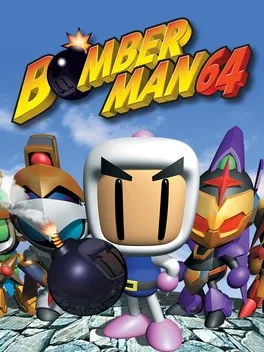
Bomberman 64
Introduction
When the Nintendo 64 era arrived, it brought with it the daunting challenge of transitioning beloved 2D franchises into the third dimension. One of the most notable transformations was seen in Bomberman 64. Released in 1997, this title represented a bold departure from the grid-based explosive puzzles of the past. Known in some regions as Explosive Bomberman or Baku Bomber Man, and often referred to as Bomberman 64 Japan to distinguish it from later releases, this game introduced a circular blast radius and a fully traversable 3D world that redefined what a Bomberman adventure could look like. It remains a polarizing yet deeply cherished entry in the long-running series.
Story & Setting
The narrative of Bomberman 64 centers on a dire threat to the peaceful Planet Bomber. A powerful and sinister being known as Altair has appeared, wielding the mysterious Omni Cube. This artifact allows Altair to drain the very life energy from planets to fuel his own ambitions. With his fortress hovering over the world, Altair and his four formidable subordinates launch an all-out assault. However, Bomberman is not alone in his quest to restore peace. With the aid of a mysterious helper named Sirius, players must guide our hero through 24 areas of perilous conflict. The journey takes Bomberman across various themed environments, from lush forests and frozen peaks to high-tech fortresses, as he works to destroy the invaders' bases and put an end to the insane attack.
Gameplay
The gameplay of Bomberman 64 was a revolutionary shift for the franchise. Unlike the classic 2D entries where movement was restricted to four directions on a grid, Bomberman can now move freely in 3D space. The most significant mechanical change is the bomb physics. Instead of the traditional cross-shaped fire pattern, explosions are spherical. Players can also "pump" bombs to make them larger and more powerful, or kick and throw them to navigate obstacles.
A key element of the Adventure mode is the "bomb jump," a technique where Bomberman must balance on top of unexploded bombs to reach higher ledges or cross gaps. This adds a heavy platforming element to the experience. Beyond the single-player campaign, the multi-player Battle mode offers endless hours of explosive action. Players can choose the standard Bomberman character or create a custom one with various cosmetic items found throughout the game, saving their progress to an N64 Controller Pak to show off their unique look to friends.
This game was released on several platforms, including the original N64 hardware and later digital distributions through Nintendo's legacy services.
Legacy
Bomberman 64 occupies a unique space in gaming history. While some purists missed the simplicity of the 2D grid, many praised the game for its creative level design and challenging boss fights. It paved the way for other 3D experiments like Bomberman Hero and Bomberman Generation. The soundtrack, characterized by its jazzy and upbeat tunes, is still celebrated by fans today. Its influence is seen in how modern Bomberman games often juggle the classic 2D style for competitive play while experimenting with 3D environments for solo adventures.
Fun Facts
- The game is known as Baku Bomber Man in Japan, which translates to "Explosive Bomber Man."
- Hidden throughout the levels are Gold Cards; collecting all 100 allows players to unlock a secret world and the true ending of the game.
- The custom character system was one of the earliest examples of deep aesthetic customization in the series, allowing for thousands of different combinations.
- If you leave the game idle on the title screen for too long, a special demo plays showing off the various bomb-jumping techniques required for advanced play.