Bust-A-Move 2: Arcade Edition
Introduction
In the mid-90s, the arcade scene was dominated by high-octane fighters and racing games, but a colorful, bubble-popping phenomenon managed to capture the hearts of millions. Bust-A-Move 2: Arcade Edition is a quintessential puzzle experience that refined the mechanics of its predecessor to near-perfection. Known for its catchy music, vibrant visuals, and deceptively simple but deep gameplay, it remains one of the most recognizable titles in the genre. Whether you were playing in a smoky arcade cabinet or on your home console, the thrill of clearing a screen with a single, well-placed shot was unparalleled. This title cemented Bub and Bob’s transition from platforming stars to puzzle icons, proving that a great hook is all you need to keep players coming back for more.
Story & Setting
While puzzle games are rarely known for complex narratives, Bust-A-Move 2: Arcade Edition features the beloved dinosaur duo Bub and Bob, who originated in the classic arcade hit Bubble Bobble. In this whimsical universe, the brothers must navigate through a series of colorful stages to clear the screen of menacing bubbles. The game is often referred to by its Japanese title, Puzzle Bobble 2 Console, reflecting its roots as a direct port of the upgraded arcade hardware. The setting is lighthearted and surreal, with various quirky characters and bosses appearing to challenge the player. While the "story" serves as a backdrop for the action, the charm of the characters and the bright, pop-art aesthetic provide a cohesive and inviting world that appeals to players of all ages.
Gameplay
At its core, Bust-A-Move 2: Arcade Edition is often described as "Tetris in reverse." Instead of falling blocks, players control a pointer at the bottom of the screen to shoot colored bubbles toward an ever-descending ceiling. The goal is to match three or more bubbles of the same color to make them disappear. If a group of bubbles is popped, any bubbles hanging solely from that group will also fall, rewarding the player with massive point bonuses and clearing the board faster.
This edition is packed with content, including the standard "Puzzle Mode" which follows a branching path of levels, allowing for high replayability. The "Arcade Mode" mimics the original coin-op experience, while the "Multiplayer Mode" introduces a competitive edge where clearing bubbles sends "garbage" bubbles to your opponent's screen. The pressure of the descending ceiling—which moves down every few shots or after a timer—creates a frantic pace that requires both precision and quick thinking. The addition of special bubbles, like the star bubble that clears all of a specific color, adds a layer of strategy that separates casual players from experts.
This game was released on several platforms, including the Nintendo 64, PlayStation, and Sega Saturn, as well as later digital releases for modern systems.
Legacy
Bust-A-Move 2: Arcade Edition is frequently cited as the best entry in the series and one of the greatest puzzle games of all time. It successfully bridged the gap between the arcade and the home console market, offering a perfect port that included extra features not found in the original arcade cabinets. Its influence can be seen in countless modern mobile games and "match-3" titles that utilize the same physics-based shooting mechanics. The game was also released under the name Bust-A-Move Again Console in certain regions and collections, further expanding its reach. Its balance of accessibility and high-level skill ceiling has allowed it to endure for decades, remaining a staple in retro gaming collections and speedrunning communities.
Fun Facts
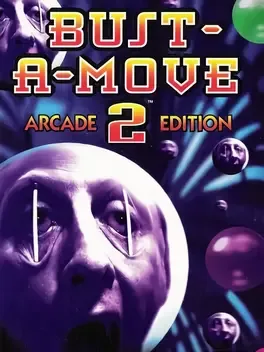
- The North American cover art for the PlayStation version is famous among gamers for being incredibly creepy, featuring a close-up of a human face with eyes wide open, which stood in stark contrast to the cute, bubbly game inside.
- This version of the game actually includes the content from "Puzzle Bobble 2X," which featured an extra set of levels and a level editor in the original Japanese arcade release.
- The game's physics allow for "bank shots" off the side walls, a mechanic that became a fundamental skill for competitive play.
- Despite being a puzzle game, it was built on the Taito F3 System arcade hardware, which was quite powerful for the time, allowing for the smooth animations and colorful sprites that defined the game's look.