Encontrado 1 artículo(s) en venta
-
Enviar un mensaje a
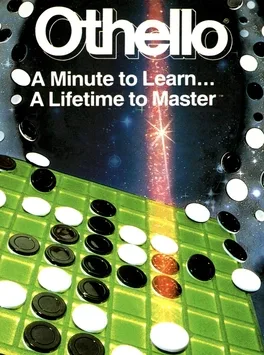
Othello is an iconic digital adaptation of the classic strategy board game that has captivated players for generations. Known by various names across different territories, including the popular Japanese title Osero and the formal Family Computer Othello, this conversion brought the deep, tactical gameplay of the physical board to the digital realm. Developed by Kawada and published by the esteemed HAL Laboratory, the game first made its mark on the Famicom Disk System in Japan. It was designed to offer a clean, accessible, and challenging experience that could appeal to both veterans of the board game and newcomers looking for a mental workout. By successfully translating the nuanced mechanics of the tabletop original into a software format, Othello became a staple of early console strategy libraries, proving that video games could be much more than just fast-paced action.
In the world of Othello, there are no sprawling kingdoms to save or princesses to rescue. Instead, the "story" is one of pure, unadulterated competition. It is a narrative of capture and reversal, played out on a minimalist 8x8 grid. The setting is traditionally a green felt board, which serves as a neutral battlefield for the opposing forces of black and white discs. Each game represents a unique struggle for dominance, where a single move can shift the tide of battle and rewrite the history of the match. The abstract nature of the setting is one of its greatest strengths, as it focuses the player's attention entirely on the mathematical and spatial challenges presented by the board. In this digital version, the setting is enhanced by simple but effective sound effects and visual indicators that make the act of flipping pieces feel satisfying and impactful.
The gameplay of Othello is defined by its famous motto: "A minute to learn, a lifetime to master." The core mechanics revolve around placing discs on an 8x8 grid with the goal of having the majority of your color showing by the end of the game. On each turn, a player must place a disc in a position that "outflanks" one or more of the opponent's pieces. Outflanking occurs when a line of the opponent's discs is enclosed at both ends by discs of your own color. When this happens, all of the opponent's discs in that line—whether they are arranged horizontally, vertically, or diagonally—are flipped to your color.
This simple premise leads to an incredibly deep strategic experience. Players must think several moves ahead, considering how a single placement might open up opportunities for their opponent or secure a vital corner. Corners are the most valuable real estate on the board because once a disc is placed there, it cannot be flipped. Controlling the edges is also a key strategy for maintaining a stable position. The digital version provides several advantages over the physical game, most notably the inclusion of sophisticated AI opponents. These computer-controlled rivals offer various difficulty levels, allowing players to sharpen their skills in solo play. Additionally, the game includes a local multiplayer mode, preserving the social competition that made the original board game a worldwide phenomenon.
This game was released on several platforms, including the Famicom Disk System, the Game Boy, and the Nintendo Entertainment System, ensuring it reached a wide audience of strategy fans.
The legacy of Othello in the video game industry is significant, particularly due to its association with HAL Laboratory. As one of the early projects for the studio, it showcased their ability to create polished and intellectually stimulating software. The game helped to solidify the popularity of the Osero brand in Japan and demonstrated that the Famicom hardware was capable of hosting complex AI-driven strategy titles. Furthermore, the NES and Game Boy versions helped introduce the game to a global audience, making Othello a household name in the early days of home console gaming. It remains a beloved title for retro collectors, often praised for its clean interface and the high quality of its AI, which remains challenging even by modern standards. The success of this conversion paved the way for many other board games to make the jump to digital formats throughout the 1980s and 1990s.