Auto Modellista
Introduction
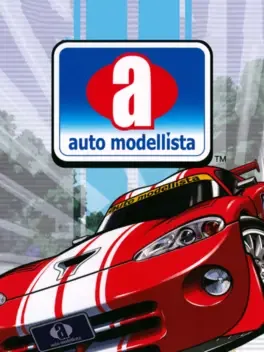
In the early 2000s, the racing genre was locked in a fierce competition toward technical photorealism. However, Capcom, a developer known more for its fighting and action titles, decided to take a sharp turn in a completely different direction. Released in 2002, Auto Modellista stood out immediately, not because of how many polygons it could push for realism, but because of its striking visual identity. It remains one of the few racing games in history to utilize high-contrast cel-shading, making the entire experience look like a high-octane anime in motion. This bold aesthetic choice ensured that the game would remain visually timeless, even as its contemporaries began to look dated.
Story & Setting
While Auto Modellista does not feature a traditional narrative campaign with characters and plot twists, it deeply immerses players in the heart of the Japanese automotive subculture. The setting evokes the neon-soaked streets of Tokyo and the misty, treacherous mountain passes (known as Touge) that inspired an entire generation of street racers. The game captures the spirit of being a dedicated enthusiast—a true "car collector" of sorts—who takes immense pride in both the performance and the aesthetic of their machine. Players progress through various racing series in the "Garage Life" mode, earning fame and parts to build the ultimate collection. The atmosphere is one of pure car worship, where the garage is a sanctuary and the road is a stage.
Gameplay
The core of the experience lies in its extensive customization and its impressive licensed roster. With over 60 top-of-the-line models from legendary manufacturers like Toyota, Nissan, Honda, Subaru, and Mitsubishi, players have a vast playground of automotive history. You can drive icons like the Skyline GT-R, the Supra, or the Lancer Evolution. The "Garage" mode is where the game truly shines, allowing players to tweak everything from suspension settings and tires to the visual flair of the car, including decals and body kits.
On the track, the gameplay is distinctly arcade-oriented. Whether you are maneuvering your way through tight mountain passes or tearing past spectators on professional race tracks like Suzuka, the speed feels electric. The game was ahead of its time in connectivity, supporting up to eight drivers online during its peak. For those playing locally, it offered a robust two-player split-screen mode. While the physics were often described as "floaty" compared to simulation-heavy titles, the sheer style of drifting through corners at lightning speeds provided a unique thrill that few other games could replicate.
This game was released on several platforms, including the PlayStation 2, Xbox, and Nintendo GameCube.
Legacy
Auto Modellista occupies a strange but beloved space in gaming history. At the time of its release, critics were divided; many praised the art direction while finding the handling mechanics difficult to master. However, over the years, it has gained a massive cult following. It proved that racing games didn't need to look like reality to be immersive or beautiful. Its influence can be seen in later titles that experimented with stylized graphics, such as the Initial D arcade games or even the comic-book style of the modern Need for Speed Unbound. It remains a testament to Capcom's willingness to experiment outside their traditional comfort zones.
Fun Facts
- The Western releases of the game, often subtitled "U.S. Tuned," featured significantly altered handling physics and more American car brands compared to the original Japanese release to better suit global tastes.
- Players could fully customize their virtual garage with posters, trophies, and toolboxes, emphasizing the "car collector" lifestyle beyond just driving.
- The game features a unique "Vee-Jay" mode, which allows players to edit their race replays with various filters, music, and visual effects to create their own stylized racing videos.