Super Ice Hockey
Introduction
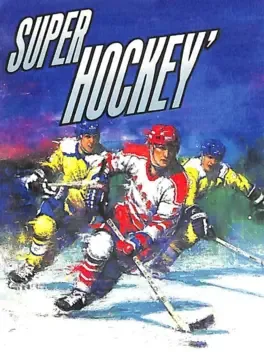
During the golden age of 16-bit sports gaming, the Super Nintendo Entertainment System (SNES) became a battleground for some of the most iconic digital athletics ever created. While many fans were enamored with the heavy hitters from EA Sports, a specific title carved out its own niche by focusing on the global stage: Super Ice Hockey. Released in late 1994, this title provided a refreshing alternative to the standard North American league simulations. In Japan, gamers might recognize it better under its alternative name, Super Hockey '94. It stands as a testament to the era's fascination with international competition, offering a fast-paced, arcade-leaning experience that prioritized national pride over corporate franchises.
Story & Setting
Unlike many modern sports games that feature a narrative-driven "career mode," the "story" of Super Ice Hockey is rooted in the real-world context of 1994 international sports. This was a pivotal year for the sport, coinciding with major international tournaments that captured the world's attention. The game eschews domestic leagues (such as the NHL) in favor of 18 of the best national teams from that specific era. The setting is purely focused on the prestigious international circuit, where players represent their home countries in pursuit of global dominance. It captures a snapshot of the mid-90s geopolitical landscape through the lens of sports, featuring rosters and team strengths that reflected the powerhouses of the time, such as Canada, Russia, and Sweden.
Gameplay
Super Ice Hockey features a distinct gameplay style that differentiates it from its peers. Utilizing a diagonal, top-down perspective, the game provides a broad view of the rink, allowing players to strategize passes and anticipate enemy movements. The controls are remarkably tight for the hardware, emphasizing quick reflexes and timing. Players can participate in several modes, including Exhibition matches for quick play, a Tournament mode that mirrors the knockout stages of international play, and a comprehensive League mode for those seeking a longer-term challenge.
Mechanically, the game balances arcade speed with simulated rules. You can expect standard hockey infractions like offsides and penalties, but the pace remains high. One of the game's standout features is its implementation of the SNES's scaling capabilities, providing a sense of depth and fluidity as the action moves from one end of the ice to the other. Managing line changes and fatigue is essential, as even the strongest national teams can falter if their star players are overextended. It is a game that rewards both tactical positioning and aggressive offensive drives.
This game was released on several platforms within the Nintendo ecosystem, primarily serving the Japanese and European markets.
- SUPER NINTENDO ENTERTAINMENT SYSTEM: PAL, NTSC-U
Legacy
While Super Ice Hockey may not have reached the same level of mainstream saturation as some of the more famous multi-platform hockey franchises, it remains a beloved cult classic among retro gaming enthusiasts. It is often cited as one of the best examples of international hockey simulation on the SNES. Its legacy is defined by its commitment to a global perspective, offering a unique time capsule of the 1994 international rosters. In the years following its release, it has been praised for its colorful graphics and high replayability, often appearing in discussions regarding hidden gems for the Super Famicom and PAL SNES libraries.
Fun Facts
- In Japan, the game was titled Super Hockey '94, aligning it with the release year of many other sports titles of the generation.
- Despite the popularity of hockey in Canada and the United States, the game never received an official North American NTSC release, making it a sought-after import for collectors in those regions.
- The game was developed by Sunsoft, a studio well-known for their high-quality audio and technical prowess on 8-bit and 16-bit systems.
- The roster of 18 national teams was quite extensive for the time, covering almost every major hockey-playing nation active in the early 90s.