Dead to Rights
Introduction
Story & Setting
Gameplay
Platforms
Legacy
Fun Facts
Introduction
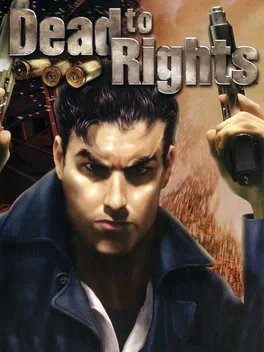
Dead to Rights is a quintessential action title from the early 2000s that captures the grit and cinematic flair of the crime-noir genre. Developed by Namco, it brought a high-octane experience to home consoles, heavily inspired by the slow-motion gunplay of Hong Kong action cinema and hard-boiled police dramas. Players are thrust into a world of betrayal, violence, and deep-seated corruption, where the line between law enforcement and vigilante justice is thin. It remains a cult classic for its uncompromising attitude, diverse gameplay mechanics, and its place in the era of cinematic shooters.
Story & Setting
The narrative of Dead to Rights follows the harrowing journey of Jack Slate, a dedicated K-9 officer in the bleak, industrial metropolis of Grant City. Jack’s life is shattered when he discovers his father has been murdered. In his pursuit of the truth, he finds himself framed for a crime he did not commit, leading to a desperate and violent escape from the Iron Point Maximum-Security Penitentiary. Now a fugitive on the run, Jack must navigate the hard streets and face off against a web of corrupt enemies to dismantle the conspiracy that destroyed his life. The setting of Grant City acts as a character itself, filled with shadows, rain-slicked alleys, and a pervasive sense of urban decay that perfectly complements the game's dark themes.
Gameplay
At its core, Dead to Rights is a hybrid of several action sub-genres. While primarily a third-person shooter, it incorporates complex hand-to-hand combat and a unique disarm system. Jack can approach enemies and perform brutal takedowns to seize their weapons, which adds a layer of tactical depth to the fast-paced gunplay. The game also features a cinematic slow-motion mechanic, allowing players to dive through the air while clearing rooms of thugs in high-style combat sequences. Beyond the violence, the game includes several minigames that break up the action, including bench pressing, arm wrestling, and even a rhythm-based dancing sequence used for undercover work. Jack’s loyal dog, Shadow, is also a vital gameplay element; he can be commanded to attack enemies or retrieve items, making the K-9 partnership a core part of the player's arsenal.
This title was widely available across the major consoles of its generation, ensuring its gritty story reached a broad audience of action fans.
Legacy
The legacy of Dead to Rights is tied to its status as a B-movie masterpiece in video game form. While it faced stiff competition from established franchises, it carved out a niche for its variety and its notoriously high level of challenge. It spawned several sequels and a reboot, though many fans still consider the original to be the definitive peak of the series. Its influence can be seen in later action titles that attempted to blend melee and shooting into a seamless, cinematic experience. It remains a fascinating snapshot of early 2000s game design, where developers often experimented with disparate mechanics to create a unique atmosphere.
Fun Facts
- The game's minigames, particularly the dancing sequence, were often cited by players as being surprisingly difficult compared to the main combat sections.
- Despite its dark and violent exterior, the inclusion of mini-games like the bench press was a nod to classic arcade tropes and character-building exercises.
- Jack Slate’s dog, Shadow, became so popular that he was often the central focus of the series' promotional materials.
- Dead to Rights was one of Namco's first major attempts to cater specifically to Western audiences with a gritty, American-style action narrative.