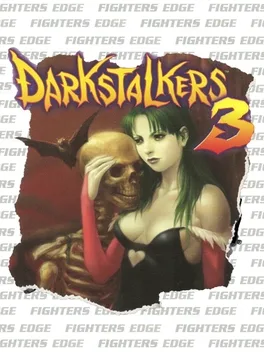
Darkstalkers 3
Introduction
Darkstalkers 3, originally released in 1997, represents the pinnacle of Capcom’s monster-themed fighting game franchise. As the second sequel in the beloved series, it pushed the boundaries of 2D animation and introduced a darker, more kinetic style of play. While it is widely recognized by its Western title, the game is also famous by its Japanese moniker, Vampire Savior: The Lord of Vampire. This entry shifted the focus from the celestial conflict of the previous games to a more personal, existential threat within the demon realm of Makai. Whether you know it as Vampire Savior or simply Vsav, the game remains a masterclass in sprite-based design and innovative fighting mechanics.
Story & Setting
The narrative of Darkstalkers 3 centers on the resurrection of Jedah Dohma, one of the three high nobles of Makai. After a long slumber, Jedah views the demon world as being in a state of terminal decay and decides the only way to save it is to reset all of existence. To accomplish this, he creates the "Majigen," a magical dimension where he summons the souls of the world's most powerful monsters. This specific plot point led to the American arcade version being titled Darkstalkers: Jedah's Damnation. Within this surreal landscape, classic characters like Morrigan and Demitri must fight for their own survival against Jedah’s terrifying vision, while new faces like B.B. Hood and Q-Bee add complexity to the lore.
Gameplay
The gameplay marked a significant departure from its predecessors, moving away from the standard round-based system. Capcom implemented the "Damage Gauge System," where matches consist of one continuous round with two life bars. When a player loses a life bar, they briefly collapse and continue the fight immediately, keeping the momentum high. This high-speed approach is why the competitive community often refers to the title as Vsav. Another major addition was the Dark Force system, allowing players to activate unique character-specific power-ups that change the flow of combat. Combined with "Impact Blasts" and the ability to recover "white health," the game offers a layer of tactical depth that set a new bar for the series.
This game was released on several platforms, including the original PlayStation and the Sega Saturn, allowing fans to experience the arcade-perfect action at home.
Legacy
The legacy of Darkstalkers 3 is defined by its unparalleled art style and fluid animation. The sprite work for characters like Jedah remains legendary in the history of the genre for its creativity and detail. Though it was technically released as Darkstalkers III: Jedah's Damnation in some regions, its influence transcends its title. Many mechanics introduced here influenced future Capcom titles, such as the Marvel vs. Capcom series. The game has maintained a dedicated cult following, with "Vsav" tournaments still appearing at major events, proving that its core mechanics and gothic aesthetic have stood the test of time.
Fun Facts
Interestingly, the Japanese phonetic version of the title is often transcribed as Vanpaia Seivaa Za Roodo Obu Vanpaia. While Western gamers were more familiar with the Darkstalkers naming convention, many hardcore fans still prefer to use the Japanese title or the shortened Vampire Savior. Another fascinating detail is that the PlayStation port included extra characters missing from the original arcade version, effectively making it a "complete" edition for console players. Despite various names and regional changes, the game's identity as a fast-paced horror fighter remains unmistakable.