Encontrado 3 artículo(s) en venta
-
Games
Enviar un mensaje a
-
Games
Enviar un mensaje a
-
Games
Enviar un mensaje a
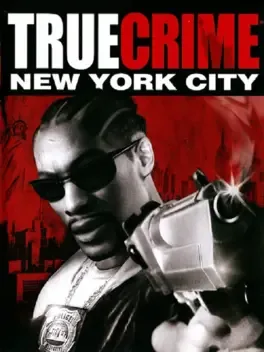
True Crime: New York City represents one of the most ambitious attempts in the sixth generation of gaming to create a living, breathing urban environment. Released as the successor to the hit True Crime: Streets of LA, this title shifts the focus from the West Coast to the gritty, sprawling streets of Manhattan. As a police-focused open-world action game, it offers a unique perspective that differentiates it from other crime-centric titles of the era. Instead of just playing as a criminal climbing the ranks, players step into the shoes of a man caught between two worlds, tasked with cleaning up the city while grappling with his own dark past. It remains a fascinating example of high-concept storytelling and gameplay variety in the early 2000s.
The narrative centers on Marcus Reed, a former gang member who turns his life around after a near-death experience, eventually becoming a police officer under the mentorship of his father’s friend, Terry Higgins. When Higgins is seemingly killed in an explosion and framed for being a mole, Reed is promoted to the organized crime unit and embarks on a quest to find the real traitor. The game’s setting is a technical marvel for its time: a 25-square-mile recreation of Manhattan, featuring authentic street names, landmarks, and a distinct atmosphere that captures the city's intensity. From the bright lights of Times Square to the moody corners of Harlem, the world feels dense and dangerous. The story is further elevated by an elite Hollywood cast, with Laurence Fishburne playing Marcus's father, Christopher Walken as a veteran detective, and Mickey Rourke as the influential Terry Higgins.
Gameplay in True Crime: New York City is defined by its "Good Cop/Bad Cop" system, which tracks every action the player takes. You have the authority to pull over any vehicle, frisk any pedestrian, and respond to various street crimes that pop up dynamically. Being a "Good Cop" involves following procedure, arresting suspects without excessive force, and turning in evidence. Conversely, "Bad Cop" behavior includes planting evidence, taking bribes, and using lethal force indiscriminately. This morality system affects how the world reacts to you and determines which of the multiple endings you receive. Combat is equally diverse, featuring four distinct fighting styles—Karate, Muay Thai, Kung Fu, and Street Fighting—which players can upgrade at various dojos. Driving sequences are frequent, and the game includes an extensive arsenal of firearms and tactical gear, allowing for intense shootouts that utilize a cover system and slow-motion precision aiming.
This game was released on several platforms, including the Xbox, PlayStation 2, and Nintendo GameCube, allowing a wide audience to experience its gritty portrayal of New York.
While True Crime: New York City was lauded for its ambition and the sheer scale of its recreation of Manhattan, it faced criticism at launch due to technical bugs and performance issues. Despite these hurdles, it remains a cult classic for its attempt to merge a deep police procedural with an open-world sandbox. The franchise ultimately saw a shift when the planned third installment, True Crime: Hong Kong, was canceled by Activision and later picked up by Square Enix to become the highly successful Sleeping Dogs. As such, New York City stands as the final chapter of the original True Crime duology, remembered for its star-studded cast and its unapologetic, streetwise attitude that captured a specific era of gritty urban media.
One of the most interesting aspects of the game is its inclusion of real-world brands and retailers, which were used to increase the realism of the Manhattan streets. Additionally, the game features a hidden cameo by the famous rapper Redman, who has his own playable mini-game where he must escape from New York in a style reminiscent of classic action films. The developers at Luxoflux actually went to New York to photograph the city extensively, ensuring that even the most obscure alleyways felt grounded in reality. The game also features a massive licensed soundtrack with over 80 tracks, ranging from hip-hop to heavy metal, reflecting the diverse culture of the city it depicts.
Games
Games
Games