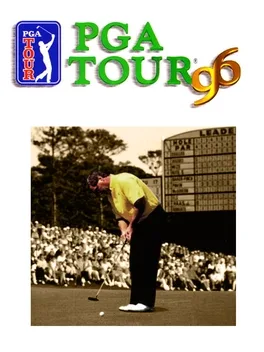
PGA Tour 96
Introduction
The mid-1990s represented a transformative era for sports simulations, and Electronic Arts was at the helm of this revolution. Released at the peak of the 16-bit era while simultaneously ushering in the 32-bit generation, PGA Tour 96 stands as a definitive entry in the long-running golf franchise. It arrived during a time when EA Sports was perfecting the "If it's in the game, it's in the game" philosophy, aiming to provide players with the most authentic professional golf experience possible on home consoles. By combining licensed professional players with meticulously recreated courses, the title set a high bar for realism and accessibility, bridging the gap between casual arcade play and hardcore simulation.
Story & Setting
In the world of PGA Tour 96, the narrative is dictated by the prestige and pressure of the 1995 PGA Tour season. Rather than a scripted plot, the "story" is the one the player creates as they climb the ranks of the professional circuit. The game places players directly into the shoes of a rising star or one of the era’s most recognizable golfers, including icons like Peter Jacobsen, Mark O'Meara, and Fuzzy Zoeller.
The setting is meticulously crafted around famous real-world locations. Players travel to legendary greens such as the TPC at Sawgrass, Spyglass Hill, and River Highlands. The atmosphere captures the quiet intensity of professional golf, featuring ambient sounds and visual cues that were highly impressive for the hardware of the time. Every fairway and bunker is modeled after its real-world counterpart, providing a digital tour of some of the most challenging landscapes in the sport.
Gameplay
The gameplay of PGA Tour 96 revolves around the classic three-click swing system, a mechanic that requires timing and precision. Players must time their first button press to start the backswing, a second to determine power at the top of the arc, and a final press to ensure a straight shot at the "snap" point. This system makes the game easy to pick up but difficult to master, as wind conditions, green elevation, and the "lie" of the ball (whether it is in the fairway, rough, or sand) all impact the trajectory and roll.
One of the standout features of this iteration is the automated caddy system. To assist players in the complex world of club selection, the computer-controlled caddy automatically assigns the most suitable club for every situation. Whether you are facing a long drive off the tee or a delicate chip over a water hazard, the caddy suggests the right tool for the job based on the distance to the pin. For variety, the game offers several modes of play: Stroke Play for a standard round, Match Play for head-to-head competition, and a comprehensive Tournament Mode that simulates the grueling schedule of a professional season.
This game was released on several platforms, including major 16-bit and 32-bit systems of the mid-90s.
Legacy
PGA Tour 96 is remembered primarily as a bridge title that showcased the technical jump between console generations. While the versions for 16-bit consoles were refined iterations of a proven formula, the PlayStation version introduced high-quality digitized graphics and full-motion video (FMV) elements that were revolutionary at the time. It was the first title in the series to appear on Sony’s hardware, laying the groundwork for the future dominance of the franchise under the Tiger Woods branding in the years to follow. While it does not carry any alternative names, its reputation as a solid, reliable sports sim has kept it in the hearts of retro gaming enthusiasts who appreciate the pure, mechanical focus of 90s golf games.
Fun Facts
- Digitized Stars: The 32-bit versions used actual digitized video footage of professional golfers to create the player sprites, giving them a more lifelike appearance than the hand-drawn sprites of previous years.
- Caddy Logic: The AI for the club selection was considered quite advanced for 1996, taking into account not just distance but also the height of the terrain.
- Commentary: The game features professional commentary that helped set the standard for the "broadcast style" presentation EA Sports is now famous for.
- The 16-bit Swan Song: For many, the SNES and Genesis versions are considered some of the most polished golf games on those systems, representing the pinnacle of what that hardware could achieve.