FIFA International Soccer
Introduction
Before the era of ultra-realistic motion capture and complex online ecosystems, the digital football landscape was changed forever by a single 16-bit title. Released in December 1993, FIFA International Soccer was more than just a sports game; it was a statement of intent from Electronic Arts. Developed by EA Canada’s Extended Play Productions team, it marked the beginning of what would become the most successful sports simulation franchise in history. While many fans today are used to the annual ritual of new releases, this original title set the gold standard for presentation and atmosphere in the early 1990s.
Story & Setting
Unlike modern sports titles that feature narrative "Career Modes" or cinematic journeys, the "story" in FIFA International Soccer was defined by the quest for global dominance. The game focused exclusively on international competition, featuring 48 national teams vying for glory. Players could participate in Exhibition matches, a full Tournament, a League, or a Playoff series. Because the game was produced before the era of comprehensive FIFPro licensing for individual player names, the rosters were populated with fictional characters. Interestingly, many of these players, such as the legendary J. J. Scurlock, were named after the game's own developers, creating a unique internal lore for the 16-bit era's football fans.
Gameplay
What truly set the game apart from contemporaries like Sensible Soccer was its revolutionary isometric perspective. By tilting the pitch to a three-quarters view, the developers provided a sense of depth and scale that side-on or top-down games simply couldn't match. This allowed for more complex passing lanes and a better view of the stadium atmosphere. The gameplay mechanics offered a blend of arcade speed and simulation depth. Players could perform a variety of moves including headers, volleys, and slide tackles. A notable (and often hilarious) mechanic involved the referee; if a player committed a foul, they could actually attempt to run away from the referee to avoid being booked, leading to a frantic chase across the pitch. During its development and in various promotional cycles, the project was known by names like EA Sports Soccer and sometimes Soccer '94, reflecting its status as a new breed of sports simulation.
This game was released on several platforms, including the Sega Mega Drive/Genesis and the Super Nintendo Entertainment System.
Legacy
FIFA International Soccer was a massive commercial success, becoming the best-selling game of the year in several regions despite launching in the final month of 1993. It proved to Electronic Arts that there was a massive global appetite for licensed football games with high production values. The success of the Genesis version led to ports on nearly every available system of the time, from the SNES to the 3DO. Its legacy lives on today in the massive EA Sports FC franchise (formerly FIFA), which continues to dominate the sports gaming market. It essentially transitioned the genre from simple arcade fun to a televised-style spectacle, introducing crowd chants and realistic stadium sound effects that are now industry standards.
Fun Facts
- One of the most famous glitches in the game allowed a player to stand directly in front of the opposing goalkeeper during a goal kick; the ball would often bounce off the player and into the net for an easy goal.
- The game was actually developed in Canada, a country not traditionally known for its football obsession at the time, which led to some unique design perspectives.
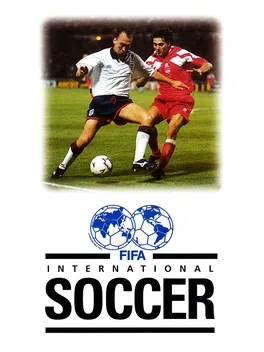
- The cover art for the original release famously featured David Platt and Piotr Świerczewski in a heated battle for the ball.
- While the Genesis version was the original lead platform, the Super Nintendo version featured slightly different graphics and a more zoomed-in camera angle.