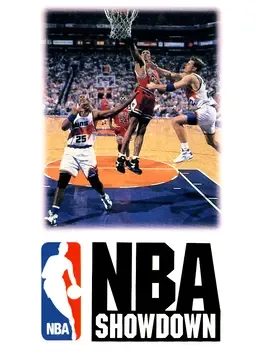
NBA Showdown
Introduction
NBA Showdown represents a pivotal moment in sports gaming history, marking the end of one era and the dawn of another. Released by Electronic Arts, it serves as the final installment in the acclaimed basketball series that utilized the classic "Playoffs" engine. This title paved the way for the industry-shaking NBA Live franchise that would dominate the late 90s. Often referred to by fans and collectors as NBA Showdown '94 or simply NBA Showdown 94, the game refined the isometric basketball experience to its absolute peak. It was a bridge between the arcade-style roots of early 16-bit sports games and the deep, season-long simulations that players crave today.
Story & Setting
As a sports simulation, the "story" of NBA Showdown is the high-stakes drama of the 1993-1994 NBA season. The setting is a faithfully recreated professional basketball landscape during a fascinating transitional period for the league. This was an era where the NBA was searching for its next superstar identity following the first retirement of Michael Jordan. For the first time in the history of EA's basketball series, the game featured all 27 NBA teams active at the time, providing a comprehensive world for players to inhabit. In Japan, the narrative focus was even more specific, as the game was released under the title NBA Pro Basketball '94: Bulls vs. Suns, highlighting the intense rivalry of the previous year's finalists.
Gameplay
The gameplay of NBA Showdown was a major evolution for the series. While it maintained the side-on perspective and engine seen in previous hits like Bulls vs. Blazers, it introduced several landmark features. Most significantly, it allowed players to engage in a full 82-game season for the first time. Previously, gamers were often limited to exhibition matches or jumping straight into the playoffs. This addition transformed the game into a true simulation where players had to manage their team through the long grind of a professional schedule to reach the championship.
Mechanically, the game struck a balance between accessibility and depth. Players could execute signature moves, power through the lane for thunderous dunks, and manage tactical elements like timeouts and substitutions. The defensive AI was improved over previous iterations, making steals and blocks more rewarding. Whether you were playing a quick exhibition or navigating the intense postseason bracket, the game captured the speed and physicality of 90s basketball.
This game was released on several platforms, including the Sega Mega Drive/Genesis and the Super Nintendo Entertainment System (SNES).
- SEGA MEGA DRIVE/GENESIS: PAL, NTSC-U
- SUPER NINTENDO ENTERTAINMENT SYSTEM: NTSC-U
Legacy
The legacy of NBA Showdown is defined by its role as a "grand finale." By including the full roster of 27 teams and the expanded season mode, it effectively perfected the 16-bit engine that EA had been developing since the late 1980s. Its success proved that console players were ready for deeper, more realistic sports management features. When NBA Live 95 arrived the following year with a new perspective and updated engine, it stood on the shoulders of the technical achievements found in Showdown. Today, it remains a beloved relic for retro enthusiasts who appreciate the specific aesthetic and feel of early-90s digital basketball.
Fun Facts
- Despite featuring all the official teams, Michael Jordan is famously absent from the roster due to licensing issues; he is typically replaced by a generic "Guard" with elite-level stats.
- The Japanese version, NBA Pro Basketball '94: Bulls vs. Suns, features unique box art that differs significantly from the Western releases.
- This was the last game in the series to feature the classic "horizontal" court view before the NBA Live series introduced the iconic 3D-style "press" camera angle.
- It was one of the first basketball games to accurately track a wide range of player statistics over the course of an entire simulated season.