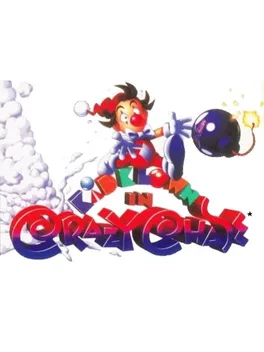
Kid Klown in Crazy Chase
Introduction
In the crowded landscape of 16-bit platformers, few titles managed to capture the frantic energy of a Saturday morning cartoon as effectively as Kid Klown in Crazy Chase. Released during the height of the Super Nintendo’s popularity, this title from Kemco moved away from standard side-scrolling tropes in favor of a pseudo-3D isometric perspective. It offered a high-speed, high-stakes experience that rewarded precision, memory, and a good sense of humor. Known primarily by its title Kid Klown in Crazy Chase, the game remains a nostalgic favorite for those who enjoyed its unique blend of racing and puzzle-solving mechanics.
Story & Setting
The narrative follows the adventures of the titular Kid Klown, a clumsy but well-meaning hero. The peace of his world is shattered when the villainous space pirate Blackjack kidnaps Princess Honey. Blackjack isn't just looking for a ransom; he wants to lure Kid Klown into a series of deadly gauntlets. The journey takes players through five diverse environments, ranging from treacherous mountain paths and dense forests to a frozen tundra and a high-tech mechanical base. Each setting is filled with slapstick obstacles designed by Blackjack to slow our hero down and ensure the Princess remains in captivity.
Gameplay
The core gameplay of Kid Klown in Crazy Chase is defined by its relentless pace. At the start of every level, a massive bomb is set with a burning fuse. Kid Klown begins at the same point as the spark, and the player must navigate the isometric path to reach the end before the fuse catches up and detonates the explosive. This creates a constant sense of urgency, as stopping for even a moment can lead to a fiery game over.
However, reaching the finish line isn't enough to progress. Scattered throughout each level are various interactable objects, mostly balloons, which contain four essential card symbols: the Heart, Spade, Diamond, and Club. Finding all four symbols is mandatory; if Kid Klown reaches the end without them, he is forced to return to the start of the level to try again. This requirement transforms the game from a simple dash into a memory-based scavenger hunt. Players must learn the layout of Blackjack's booby traps—which range from falling logs to giant springs—to efficiently collect the symbols while maintaining speed. The game features various "hurt" animations for Kid Klown, leaning heavily into the slapstick theme as he gets flattened, burned, or frozen by the environment.
This game was released on several platforms, including the Super Nintendo and the Game Boy Advance.
- SUPER FAMICOM: NTSC-J
- GAME BOY ADVANCE: WORLDWIDE
- SUPER NINTENDO ENTERTAINMENT SYSTEM: PAL
Legacy
Kid Klown in Crazy Chase is remembered as one of the most visually distinct games on the Super Nintendo. Its use of large, expressive sprites and fluid animations made it feel like an interactive animation. While it never reached the same level of fame as the genre's titans, it earned a loyal following that appreciated its steep difficulty curve and unique perspective. The game eventually saw a sequel on the PlayStation, Kid Klown in Crazy Chase 2: Love and Magic, though the original remains the most iconic entry in the series. Its transition to the Game Boy Advance years later allowed a new generation of players to experience the chaotic race against time.
Fun Facts
- The character of Kid Klown was originally created for the Western release of a Japanese game called Mickey Mouse III: Yume Fuusen. Because Kemco lost the Disney license in the United States, they redesigned the sprites to create the Kid Klown persona.
- Depending on how many symbols you collect and how fast you finish, you can play a bonus game at the end of each level to earn extra lives.
- If you manage to collect all four card symbols and complete the level without taking damage, you are awarded a "Perfect" rank, which is essential for players aiming to see the best possible ending.